Macchiaioli at Palazzo Reale: the Risorgimento in paintings that speak to the present
The major exhibition dedicated to the Macchiaioli at Palazzo Reale in Milan is much more than an exhibition linked to the cultural Olympics: it is an opportunity to reinterpret one of the most visionary movements of 19th-century Europe, focusing not only on its revolutionary pictorial choices, but also on its powerful intertwining with the political history of the Risorgimento.
In this article, we analyse the deeper meaning of the exhibition, the historical context, the protagonists and why today – in 2026 – the Macchiaioli still speak in a surprisingly relevant way.
The exhibition at Palazzo Reale: a unique opportunity
The text provided reveals a clear structure:
- Location: Palazzo Reale, Milan
- Period: until 14 June
- Number of works: approximately 100 paintings
- Curators: Fernando Mazzocca, Francesca Dini, Elisabetta Matteucci
- Focus:
- reconstruction of the artistic and political history of the movement
- chronological period 1848–1872 (date of Giuseppe Mazzini’s death)
- crucial role of Florence and Milan
- presence of little-known works, such as:
- Primizie by Odoardo Borrani
- La toelette del mattino by Telemaco Signorini, formerly owned by Arturo Toscanini
The exhibition was conceived in the context of the Cultural Olympics: Milan presents itself to the world not only as a city of sport and design, but also as a laboratory of memory, identity and artistic innovation.
Who were the Macchiaioli (and why are they still important today)?
A short-lived but disruptive movement
The Macchiaioli were a group of painters active in the mid-19th century, mainly in Tuscany, who revolutionised the way of painting even before the French Impressionists.
The name, initially coined in a derogatory sense by critics, came from their way of constructing images using ‘spots’ of colour and light, breaking with academicism.
Historical arc of the exhibition: 1848–1872
- 1848: a key year in the Risorgimento, with revolutions in Europe and patriotic uprisings in Italy.
- 1872: death of Giuseppe Mazzini, a political and moral figurehead for many Macchiaioli.
Their artistic adventure took place within these chronological boundaries: brief, but capable of ‘marking a radical turning point in the history of Italian art’, as curator Fernando Mazzocca points out.
Painters, but also intellectuals and militants
The text recalls a decisive point: the Macchiaioli were not only formal innovators, but also supporters of Mazzini’s political ideas.
This implies:
- adherence to the ideals of national unity, freedom and republicanism
- attention to civil, social and patriotic issues
- participation – direct or indirect – in the battles of the Risorgimento
They were cultured painters who frequented cafés, salons and newspapers, debating politics and society. Their painting thus became:
- a visual chronicle of their time
- critical commentary on social reality
- a poetic manifesto of a new Italy
Florence, Milan and the Michelangiolo café: where the revolution was born
Florence: the cradle of the Macchiaioli
The exhibition highlights the role of Florence, which between 1865 and 1871 became the provisional capital of the Kingdom of Italy. But the core of the movement was already born in 1855, in a specific place:
a small room in the centrally located Michelangiolo café
Here, a group of young painters – including Signorini, Borrani, Fattori, Lega and Sernesi – would meet to
- discuss painting and politics
- engage with European culture
- challenge academic conventions
The café was not just a meeting place: it was a laboratory of ideas, where a new vision of the relationship between art, reality and civic engagement was formed.
Milan: the bridge to the future
While Florence was the cradle of the movement, Milan played at least three fundamental roles:
- Modern cultural capital: an industrial, dynamic city, open to international influences.
- Strategic exhibition venue: here, the works of the Macchiaioli entered into dialogue with the public, critics and art dealers of the North.
- A place for critical reinterpretation: today, the exhibition at Palazzo Reale serves as a lens through which to reinterpret the entire history of the movement, with the benefit of a century and a half of hindsight.
This dual centrality of Florence and Milan is one of the narrative keys to the exhibition.
From ‘macchia’ to plein air landscape: a revolution in perspective
What does ‘macchia’ mean?
The ‘macchia’ is not a stylistic quirk, but a real programme:
- constructing the image through large areas of colour and light, without rigid outlines
- making the visual impact of the scene immediate, before the details
- restoring the optical and luminous effect rather than a meticulous description
It is a way of seeing the world that anticipates, in many respects, the Impressionist lesson, but with a more deeply ethical and civil root.
The en plein air landscape
The exhibition’s title declares the transition ‘from portraits to en plein air landscapes’. For the Macchiaioli, painting outdoors, from life, was
- an act of fidelity to reality
- a technical challenge (managing changing light, short timescales, materials)
- a poetic gesture: Italian nature and landscape as protagonists of a new national identity
The Tuscan countryside, the Tyrrhenian coast, scenes of peasant or military life become:
- symbolic places of the new country that was emerging
- spaces where light conveys freedom, hope and change
Themes, works and protagonists: what to expect in the exhibition
Although the text provided does not list the entire exhibition itinerary, we can deduce some thematic lines and link them to the works mentioned.
- The Risorgimento period
It is likely that an important section will be dedicated to works related to:
- the wars of independence
- Garibaldi’s volunteers
- the daily life of soldiers
The idea, mentioned in the article, that the Macchiaioli addressed ‘common themes and battles’ is consistent with masterpieces such as:
- camp scenes
- departure of volunteers
- moments of waiting, wounds, field hospitals
One work cited in this context is:
Odoardo Borrani, 26 April 1859
The date refers to the eve of the Second War of Independence. The work, on display in the exhibition, translates into images the atmosphere of:
- tension
- waiting
- patriotic fervour
for those who were about to go to war for the unification of Italy.
- Everyday life, bourgeois intimacy, new subjects
Not just battles: the Macchiaioli brought to painting:
- bourgeois interiors
- domestic moments
- work scenes
- family portraits
A significant example is:
Telemaco Signorini, La toelette del mattino
The work, which once belonged to Arturo Toscanini, combines:
- refinement of internal light
- naturalness of gesture
- modernity of the gaze on female intimacy
It demonstrates how the movement can be revolutionary even in small, everyday situations.
- Nature, seasons, work in the fields
Another central theme is represented by works such as Primizie by Odoardo Borrani, mentioned in the article:
- the title suggests the first fruits, the beginning of a season, the bond between man and the earth
- attention to simple gestures and natural cycles
- the ability to combine realism and luminous poetry
Here, the Macchiaioli become singers of a dignified rurality, far from folklore, close to an ethical idea of work and community.
The intertwining of art and politics: the Macchiaioli as ‘Mazzinian painters’
Mazzini as a guiding light
The text is clear: the Macchiaioli were convinced Mazzinians. This implies:
- faith in the republic, in the people, in education through culture
- a vision of art as a moral tool, not mere decoration
- distrust of conformism and political compromise
The fact that the exhibition ideally ends with 1872, the year of Mazzini’s death, indicates that:
- with the disappearance of their political reference point, the revolutionary charge of the movement also faded
- another phase of the Italian nineteenth century began, one that was more institutional and less utopian
Images as ‘manifestos’ of the Risorgimento
We do not find flags waved rhetorically, but:
- the faces of soldiers, peasants, expectant women, and absorbed bourgeoisie
- landscapes crossed by troops, empty streets after the passage of armies
- silent rooms where the echo of history can be heard
The strength of the Macchiaioli lies precisely in this:
transforming great history into stories; the Risorgimento into concrete lives and gazes.
A European movement (not a footnote to Impressionism)
Beyond the cliché
The Macchiaioli are often dismissed as ‘the Italian Impressionists’. It is a convenient but misleading simplification:
- chronologically, many of their experiments with light and plein air painting predate the great French Impressionist cycles
- culturally, their connection with the Risorgimento and Mazzini makes them different: less light-hearted, more ethical
- linguistically, the ‘macchia’ is not just a vibration of light, but a solid construction of the image
The exhibition at Palazzo Reale, part of the cultural Olympics programme, is the right context to reiterate that:
the Macchiaioli are a central chapter in 19th-century European painting, not a regional or derivative note.
Why see the exhibition today (and what it teaches us)
- Understanding Italy through images
In the age of social media and visual communication, returning to these paintings means:
- rethinking how images construct collective identities
- understanding that art is never neutral: it chooses what to show, how and why
- discovering that even in the 19th century, the relationship between art, politics and public mediation was crucial
- Rediscovering a ‘militant’ idea of culture
The Macchiaioli were painters who:
- took a stand
- took risks, even professionally
- combined technical expertise and civic engagement
In times when culture is often reduced to entertainment, revisiting works born of deep convictions is an antidote to superficiality.
- A lesson in contemporary perspective
Attention to:
- details of everyday life
- marginal, invisible, uncelebrated
- sudden flashes of light that transform ordinary scenes
makes them extraordinarily close to contemporary sensibilities:
- photographic
- cinematographic
- documentary
Going to an exhibition is also an exercise in training our way of looking at reality.
How to prepare for your visit: some practical advice
To get the most out of such a rich exhibition:
- Keep in mind the three keys to understanding
When you find yourself in front of the paintings, try to ask yourself:
- What historical moment does it depict?
– Before, during or after a crucial moment in the Risorgimento? - What kind of light is used?
– Domestic interior, outdoor landscape, sunset, backlighting? - What is the artist’s ethical point of view?
– Is he empathetic towards his subject? Does he exalt it, question it, problematise it? - Don’t rush: focus on a few works
With 100 paintings on display, it is easy to get lost. Better:
- choose 8–10 works and devote a few more minutes to them
- compare portraits, landscapes and historical scenes
- if possible, read the captions in relation to the context of 1848–1872
- Connect the exhibition to the city
As you leave the Royal Palace, ask yourself:
- how this nineteenth-century vision of Italy relates to Milan in 2026
- what idea of ‘country’ emerges then and what emerges today
- whether there are any ‘contemporary Macchiaioli’: artists, photographers, filmmakers who combine a formal gaze with civic awareness
The Macchiaioli, a visionary movement for uncertain times
The subtitle of the exhibition refers to a ‘visionary movement‘. This is no exaggeration:
- they redesigned the language of painting
- they fused art and politics in a way that was not rhetorical, but deeply human
- they anticipated European trends, while remaining rooted in Italian specificity
In the climate of the cultural Olympics, Milan has chosen not to limit itself to big international names or spectacular events: it is offering the public an opportunity for collective self-portraiture, looking to its past to question the present.
Visiting ‘I Macchiaioli a Palazzo Reale’ is not just an act for art lovers: it is a way to ask ourselves, once again:
what it means today to be citizens, spectators and protagonists of history, and what role we want to give to the images that surround us.
AN Hotels venues: excellence in Italian hospitality
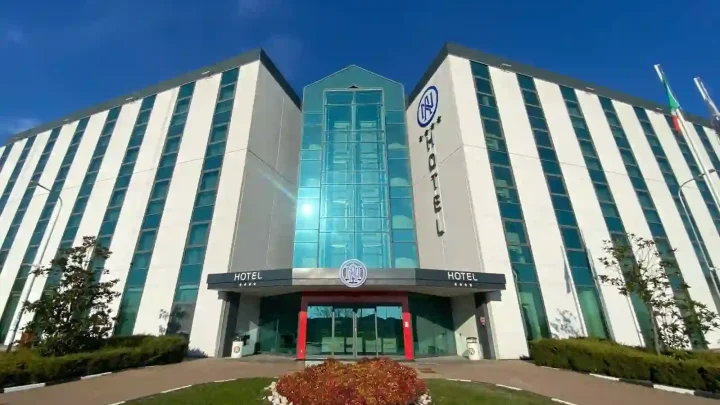
AN Hotels brings together three 4-star hotels in the eastern and southern metropolitan areas of Milan, designed for those travelling for major events, work or pleasure. Three different structures, one common thread: a warm welcome, precise organisation and services designed to make every guest feel special.


AN Hotel Milano San Donato **** is a 4-star hotel located close to the Santa Giulia area and the Olympic Village. Quiet rooms, contemporary furnishings, fast Wi-Fi and a breakfast designed to satisfy even the most demanding palates. Its proximity to the main roads and underground connections allows you to get around quickly and easily. For a gourmet dinner, the Privé restaurant inside the hotel awaits you.


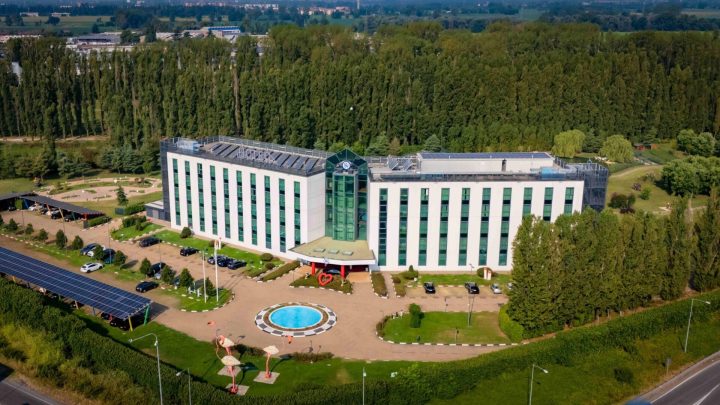
AN Park Hotel Milano Settala **** is the jewel in the crown of the collection. Set in a large park with a swimming pool, children’s area and mini golf course, it offers the perfect balance between high-end hospitality and authentic relaxation. The spacious meeting rooms and elegant event spaces make it perfect for business meetings, hospitality during the Olympics and private evenings. Here, the days end with aperitifs in the park and elegant dinners in the Privé gourmet restaurant.


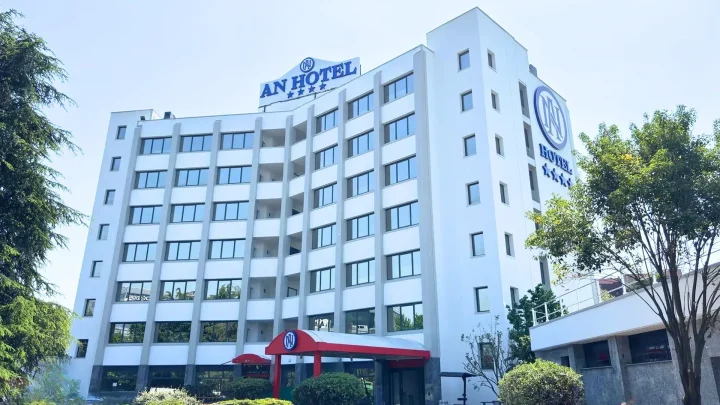
AN Hotel Milano Melegnano **** is ideal for those who want to stay away from the hustle and bustle, without sacrificing proximity to Milan and the main roads. Easy access, convenient parking and functional rooms guarantee true rest after busy days.


Discover the world of AN Hotels and continue exploring the Magazine for insights, travel tips and venue guides. The staff is on hand to help you choose the hotel that best suits your style of stay.