Piccolo Teatro in Milan: history, venues and performances
In Milan, an evening at the theatre can begin long before the curtain rises. It might start outside a building in the historic centre, crossing a square near Brera or entering an auditorium where the distance between performers and audience seems almost to disappear. These are three different ways of encountering the Piccolo Teatro in Milan, an institution that has been part of the city’s cultural life since 1947 and continues to question the present through the stories brought to the stage.
Anyone looking for performances at the Piccolo Teatro soon discovers that there is no single auditorium: Teatro Grassi, Teatro Strehler and Teatro Studio Melato have different characters and programmes. Getting to know them helps not only with choosing what to see but also with organising a visit. This guide traces the Piccolo’s beginnings, introduces its three venues and offers practical advice for enjoying an evening at the theatre in Milan, including for visitors arriving from abroad.
Piccolo Teatro in Milan: an art theatre for everyone
The Piccolo Teatro was born on 14 May 1947, while Milan was still rebuilding its places, relationships and institutions after the war. At the theatre in Via Rovello, Maxim Gorky’s The Lower Depths was performed, directed by Giorgio Strehler. That first performance marked the beginning of Italy’s first publicly supported permanent repertory theatre for drama, founded by Paolo Grassi and Strehler around an ambitious idea: to make theatre a shared cultural resource, rather than a privilege reserved for the few.
The chosen motto, ‘Teatro d’Arte per Tutti’ (‘An Art Theatre for Everyone’), brings together two ambitions that might appear to be in tension: rigorous artistic exploration and the wish to reach a broad audience. It does not mean simplifying plays or giving up experimentation. Instead, it means creating the conditions in which classics and new writing can become opportunities for learning, discussion and civic participation.
In this history, Nina Vinchi deserves to be remembered alongside the founders. A decisive figure in the Piccolo’s organisational and administrative life, Vinchi helped turn the cultural project into an institution capable of enduring. The cloister in Via Rovello bears her name: a reminder to recognise the work, often less visible, that is needed to keep a theatre alive.
Over the years, the Piccolo has extended its horizons beyond Milan, establishing itself as a Theatre of Europe and a meeting place for international companies, artists and theatrical languages. That vocation remains recognisable today: its identity is not defined by a single director or genre but by an approach that connects tradition, experimentation and audiences. The 2026/27 season, leading up to its 80th anniversary in May 2027, gives visitors another reason to explore this legacy.
The Piccolo Teatro’s three venues: which should you choose?
Understanding the difference between the venues is essential. When buying a ticket, checking the theatre’s name is just as important as checking the date: the buildings occupy different parts of the city and offer different theatrical experiences. The Grassi preserves the site of the institution’s beginnings; the Strehler welcomes large-scale productions; and the Studio Melato explores a closer, more flexible relationship with the audience.
Teatro Grassi: the historic venue in Via Rovello
Teatro Grassi, at Via Rovello 2, is where the Piccolo’s story begins. The auditorium that opened in 1947 retains the symbolic value of that civic project: attending a performance here means sitting in the same place where a new idea of public theatre took shape. The building was completely renovated in 2009 and accommodates around 500 spectators; its distinctive details include the Z-shaped seats designed by Marco Zanuso.
Its intimate scale encourages attention to language, acting and the nuances of a performance, although the venue is by no means limited to one type of repertoire. Before going inside, it is also worth taking in the surroundings of Via Rovello and the Chiostro Nina Vinchi, when accessible: the Piccolo is part of an urban fabric made up of courtyards, passageways and layers of architecture. For those travelling by underground, Cordusio and Cairoli on the M1 line are the stops indicated by the theatre.
Teatro Strehler: a major contemporary stage
At Largo Greppi 1 stands Teatro Strehler, designed by Marco Zanuso and inaugurated in 1998 with Mozart’s Così fan tutte, Giorgio Strehler’s final production as a director. This venue was conceived to accommodate large-scale staging and different artistic languages: alongside drama, its programme may include dance, concerts and other artistic events.
The opening of the Strehler gave the city a stage designed for dialogue with major Italian and international productions. Its architecture and spatial arrangement convey the idea of a theatre as a public meeting place, not merely an auditorium to enter a few minutes before the performance begins. Lanza on the M2 line is the most immediate underground reference; the neighbourhood also offers the opportunity to extend the evening with a walk towards the centre or the Brera area.
Teatro Studio Melato: experimentation and proximity to the audience
Teatro Studio Melato, at Via Rivoli 6, occupies the former Teatro Fossati, which reopened in 1986 as an experimental space and is now named after the actress Mariangela Melato. Its circular layout creates a distinctive relationship between stage and auditorium: the positions of spectators and the way the action is constructed can become part of the theatrical experience itself.
The Studio was also conceived as a place for training and artistic enquiry, with connections to the Piccolo’s theatre school. It can be an especially stimulating choice for visitors curious about new forms of expression. That does not mean every production is abstract or difficult: what matters is being willing to discover a less conventional use of space. The theatre also indicates Lanza on the M2 line for this venue.
The productions that have shaped the Piccolo’s identity
It would be impossible to tell the Piccolo’s artistic story without mentioning Arlecchino servitore di due padroni (The Servant of Two Masters). Giorgio Strehler’s staging, inspired by Carlo Goldoni’s comedy, became one of the symbols of Italian theatre around the world. Its success rests not only on the energy of commedia dell’arte but also on its ability to bring a historical tradition into dialogue with contemporary audiences.
Strehler also tackled Shakespeare and Bertolt Brecht, creating productions in which the precision of his direction was inseparable from attention to human relationships and society’s contradictions. Among the landmarks of his legacy are The Tempest and major reinterpretations of the European repertoire. Yet the Piccolo did not remain fixed in its founder’s mould: with Luca Ronconi and other leading figures on the international stage, it explored very different narrative structures, theatrical languages and ways of performing.
The result is a history that cannot be contained within the label of ‘classical theatre’. Canonical texts, new writing, director-led theatre, experimentation and dialogue with other arts coexist within the same project. For visitors, this leads to one straightforward recommendation: rather than choosing solely on the reputation of a title, read the production notes and find out which interpretation is being offered.
The 2026/27 season: between memory and new perspectives
The 2026/27 season is special because it takes the Piccolo towards the 80th anniversary of its foundation. Presented under the theme of time, the programme uses the anniversary to connect memory with the present, and repertoire with new questions. This is more than a celebration: the season demonstrates the wish to keep the stage open to contemporary languages and to the issues running through society.
Examples from the season include OSCAR, directed by Antonio Latella and starring Sonia Bergamasco at Teatro Strehler, and Marco Paolini’s work at Teatro Grassi, including Bestiario idrico and Dov’è il Po?. They sit alongside fresh interpretations of repertory authors, such as Goldoni’s Una delle ultime sere di carnovale, directed by Valerio Binasco. These are markedly different offerings: a useful reminder that the Piccolo cannot be reduced to a single style.
When deciding what to see, three elements are worth considering: the subject, the theatrical language and the running time. A comedy might be an ideal introduction for someone who seldom visits the theatre; an experimental production might appeal to those who prefer less predictable forms; a performance in another language or with surtitles might suit an international visitor. For dates, casts, possible changes and availability, always consult the Piccolo Teatro’s official programme.
How to plan an evening at the Piccolo Teatro
Tickets: choosing a production and checking the venue
The most practical place to begin is by choosing a production, opening its listing and checking the venue, date, start time, running time and guidance about the intended audience. The official website allows visitors to buy tickets and, where applicable, select an area and seat. Telephone booking and physical box offices are also available, although procedures and opening times differ between venues.
One detail is especially important: not every auditorium has a box office offering the same service. Teatro Strehler has a box office with advance-sales opening hours; at the Grassi and Studio Melato, the counters operate on performance days shortly before the show. Conditions governing exchanges and cancellations may be restrictive, so read them before paying. Arriving early also allows time to find the correct entrance without turning a theatre visit into a race against the clock.
Getting there: three addresses not to confuse
For a straightforward evening, save the complete address shown on your ticket to your phone. Teatro Grassi is at Via Rovello 2, near Cordusio and Cairoli on the M1 line. Teatro Strehler is at Largo Greppi 1, with Lanza on the M2 line as a reference point. Teatro Studio Melato is at Via Rivoli 6, also served by Lanza on the M2 line.
These directions are points of orientation, not promises of a particular journey time: line changes, traffic conditions and evening timetables can affect travel. Before setting out, check the last suitable service if you intend to use public transport after the performance. If you are driving, check parking options, access arrangements and any possible traffic restrictions in the area you have chosen.
International visitors and accessibility
For anyone who does not speak Italian, reading an English-language synopsis is not enough to guarantee that the production will be understandable without knowing the language. For some productions or specific performances, the Piccolo provides English surtitles and other language-support arrangements: availability must be checked on the individual production page. It would be misleading to assume that every event offers the same service.
Attention to accessibility is also expressed through initiatives such as Piccolo Aperto, which has developed activities and tools for audiences with different needs, including audio description, touch tours, captions and Italian Sign Language interpretation on specific occasions. For mobility requirements, sensory disabilities or particular requests, the safest course is to contact the dedicated service in advance at accessibilita@piccoloteatromilano.it, specifying the performance, date and individual needs.
An evening at the theatre in the heart of Milan
The Piccolo makes it possible to plan very different itineraries. From Teatro Grassi, visitors can spend time exploring the streets of the historic centre; from the Strehler and Studio Melato venues, it is easy to experience the cultural atmosphere of the Brera area. A walk before the performance can help change the pace, while arranging dinner in advance avoids uncertainty about timings, particularly if the show finishes late.
There is no need to fill the entire day with stops. Sometimes the best option is to give the theatre its own space and let the rest of the evening provide the setting. For other ideas, the AN Hotels Magazine offers a guide to what to do in Milan in the evening, covering neighbourhoods, walks and cultural experiences. Anyone keen to compare different stages can also explore its feature on the Arcimboldi Theatre in Milan, an institution with a different history and type of programme.
Where to stay when attending a performance
Visitors coming to Milan for one or more performances may decide to stay outside the city centre, planning their connections to the venue shown on the ticket with care. AN Hotel Milano San Donato, in San Donato Milanese, is one of the options in the AN Hotels portfolio for travellers who prefer a base in the southern part of the metropolitan area. The decision should take account of the evening’s plans, when the performance is due to finish and the transport available for the return journey.
A well-planned cultural stay can also leave room for a morning exploring Milanese museums, neighbourhoods and architecture. With its three venues, the Piccolo can therefore become the centrepiece of a visit or a meaningful stop on a broader itinerary.
AN Hotels venues: excellence in Italian hospitality
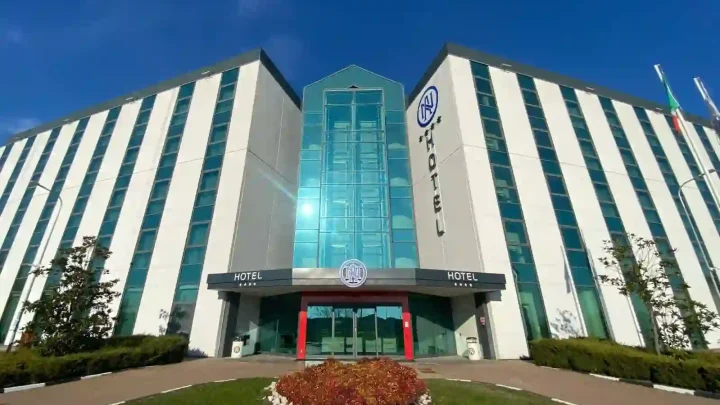
The Milan portfolio of AN Hotels brings together three four-star hotels in the eastern and southern metropolitan area of Milan, designed for people travelling for major events, business or pleasure. Three different properties with one shared approach: a warm welcome, careful organisation and services designed to make every guest feel at the centre of the experience.
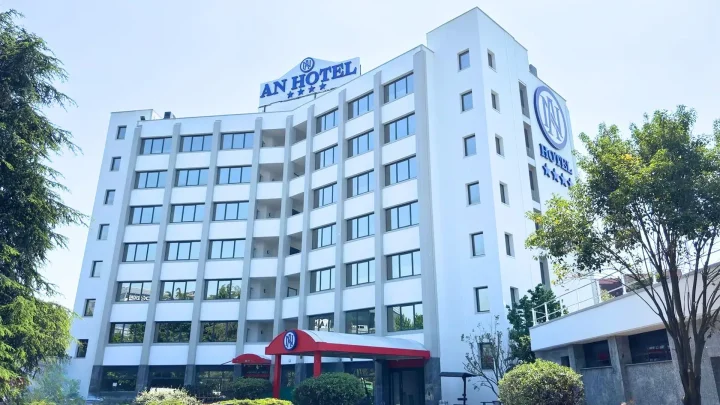
AN Hotel Milano San Donato is the four-star hotel located near the Santa Giulia area and the Unipol Dome Arena. Rooms with contemporary furnishings, Wi-Fi and a breakfast designed to suit every palate, including the most discerning. Its proximity to major roads and underground connections makes travelling easier. The hotel offers private, on-site parking, convenient for guests arriving by car. For a gourmet dinner, the hotel’s Ristorante Privé awaits.
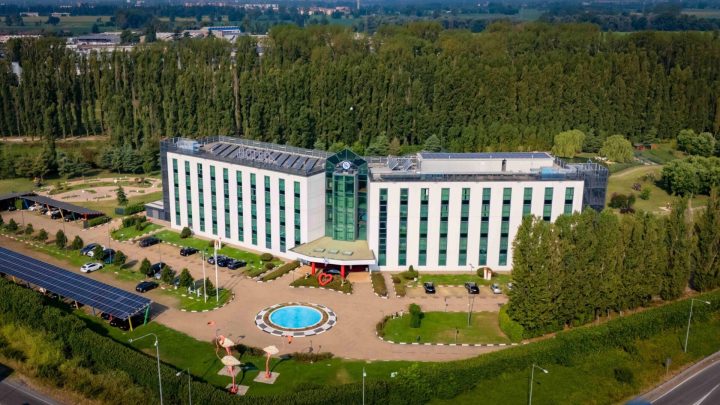
AN Park Hotel Milano Settala is the flagship of the collection. Set within a large park with an outdoor swimming pool, children’s area and minigolf course, it offers a balance between high-quality hospitality and relaxation. Its spacious meeting rooms and elegant event spaces are suited to business meetings, hospitality during major events and private evenings. Private, on-site also with covered parking makes arriving by car more convenient. Here, days draw to a close with aperitifs in the park and elegant dinners at Ristorante Privé.
AN Hotel Milano Melegnano is ideal for guests who want to stay away from the bustle without losing proximity to Milan and the main roads. Convenient access, private, on-site parking and practical rooms encourage rest after busy days.
Discover the world of AN Hotels and continue exploring the Magazine for insights, travel advice and guides to venues. The team is available to help you choose the hotel best suited to your style of stay.
What are you waiting for? Book your experience now: info@an-hotels.com – +39 02 97071337
👉 Check availability and book now with AN Hotels
AN Hotels venues: excellence in Italian hospitality
AN Hotels brings together three 4-star hotels in the eastern and southern metropolitan areas of Milan, designed for those travelling for major events, work or pleasure. Three different structures, one common thread: a warm welcome, precise organisation and services designed to make every guest feel special.


AN Hotel Milano San Donato **** is a 4-star hotel located close to the Santa Giulia area and the Unipol Dome-Arena. Quiet rooms, contemporary furnishings, fast Wi-Fi and a breakfast designed to satisfy even the most demanding palates. Its proximity to the main roads and underground connections allows you to get around quickly and easily. The hotel has private, on-site parking, convenient for those arriving by car. For a gourmet dinner, the Privé restaurant inside the hotel awaits you.


AN Park Hotel Milano Settala **** is the jewel in the crown of the collection. Set in a large park with an outdoor swimming pool, children’s area and mini golf course, it offers the perfect balance between high-end hospitality and authentic relaxation. The park also features a fitness trail for outdoor exercise. The spacious meeting rooms and elegant event spaces make it perfect for business meetings, hospitality during major events and private evenings. Private, on-site also with covered parking makes arriving by car more convenient. Here, the days end with aperitifs in the park and elegant dinners in the Privé gourmet restaurant. The hotel has an in-house gym for its guests.


AN Hotel Milano Melegnano **** is ideal for those who want to stay away from the hustle and bustle, without sacrificing proximity to Milan and the main roads. Easy access, private, on-site parking and functional rooms guarantee true rest after busy days.


Discover the world of AN Hotels and continue exploring the Magazine for insights, travel tips and venue guides. The staff is on hand to help you choose the hotel that best suits your style of stay.
What are you waiting for? Book your experience now! info@an-hotels.com – +39 02 97071337