Teatro Carcano in Milan: history, performances and a visitor’s guide
On Corso di Porta Romana, just a short distance from the everyday bustle of central Milan, stands a theatre that has changed its appearance many times without losing its name. Teatro Carcano was founded in 1803 as a stage for Milanese society, lived through the golden age of opera, became a cinema and returned to drama, dance and cultural debate. Today, its season invites audiences to explore the present through different stories, forms of expression and perspectives. Its history and programme offer two ways of approaching a cultural visit to Milan.
The history of Teatro Carcano: over two centuries of Milanese culture
Its beginnings in 1803 and Luigi Canonica’s design
The story begins when Giuseppe Carcano, a member of a noble Milanese family and a lover of the arts, decides to move beyond the limitations of the private theatre he had established in his palace. In 1801, plans take shape for a new auditorium on the site of the former convent of San Domenico and the former church of San Lazzaro. The architect is Luigi Canonica, who draws inspiration from La Scala and the Teatro della Cannobiana.
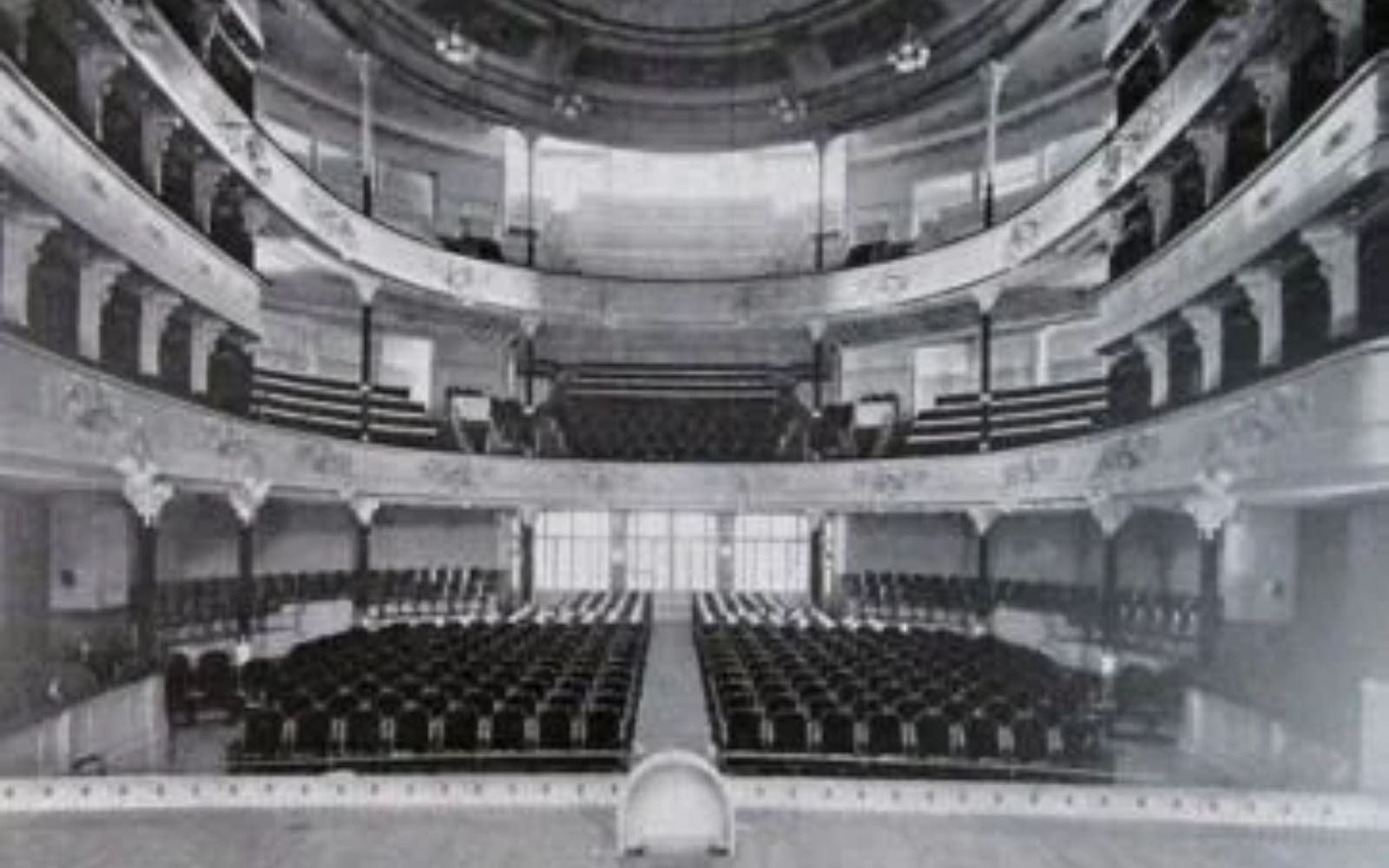
The result is a theatre designed for a city that also wants to see itself reflected in performance: five tiers of boxes, an upper gallery, neoclassical decoration and a ceiling embellished with stucco and gilding. It is a meeting place for the nobility and the bourgeoisie. The opening night, on 3 September 1803, features Zaira by Francesco Federici, Ines de Castro by Niccolò Antonio Zingarelli and two ballets. From the outset, music, theatre and dance share the same building.
The nineteenth century: opera, celebrated performers and the city’s history
The first half of the nineteenth century gives Carcano some defining chapters in the history of opera. Niccolò Paganini performs here in 1813; in the years that follow, Rossini’s works and performances by Giuditta Pasta come to the theatre. The celebrated soprano’s presence is closely associated with two world premières: Anna Bolena by Gaetano Donizetti in December 1830 and La sonnambula by Vincenzo Bellini in March 1831. These two occasions tie the theatre to the history of Italian opera.
Politics also enters its story. During Milan’s Five Days uprising of 1848, barricades are erected in front of the entrance and, after the insurrection, Carcano is among the first theatres to resume performances. In 1858, it hosts the first performance of the march later known as La bella Gigogin, destined to become a patriotic song. Later, in 1884, Eleonora Duse makes her debut before Milanese audiences here: another moment that illustrates the auditorium’s evolution from opera towards major dramatic productions.
From Cinema Arcadia to the revival of Carcano
The twentieth century is not simply a continuation of nineteenth-century success. Following financial difficulties and closures, the theatre undergoes extensive renovation in 1913–1914. After the Second World War, cinema gradually takes precedence; from 1969 the venue is known as Cinema Arcadia, attracting film enthusiasts, including admirers of auteur cinema. Yet its theatrical vocation never disappears: in 1965, the Piccolo Teatro had already brought Sul caso Oppenheimer to the venue in a significant experiment in taking theatre beyond its traditional central locations.
On 24 November 1980, the building officially becomes Teatro Carcano once again and resumes a continuous theatrical programme. Subsequent seasons welcome leading performers in drama and dance; between 1997 and 2009, Giulio Bosetti’s direction helps shape its identity. In 2021, new management and the artistic direction of Lella Costa and Serena Sinigaglia usher in another phase. These successive revivals reflect the city’s changing character.
The architecture of Teatro Carcano: a building that tells Milan’s story
The original auditorium and the transformation of 1914
To imagine Carcano in its earliest years is to picture a traditional Italian-style theatre, with tiers of boxes surrounding a richly decorated auditorium. The building that stands today, however, is not entirely the one Canonica designed. Its reopening in 1914 follows work based on a design by Nazzareno Moretti: the street-facing frontage, performers’ facilities and stage equipment are reconfigured, seeking a balance between architectural presence, practicality and safety.
The new recessed façade, with its curved portico, reflects an eclectic taste in which neoclassical references blend with floral influences. Yet already in the 1920s, the construction of a residential structure above the portico changes the way the building is seen from the street. Part of its interest lies in these successive layers of transformation.
The façade, interiors and later restorations
Later interventions also reveal changes in taste and use. In the early 1990s, certain decorative details and the entrance canopy revive a floral architectural language; in 2010, the flooring, seating and auditorium lighting are among the elements renewed. Today, the stalls, balcony and stage form a space suited to contemporary theatre, while retaining traces of earlier periods. The building invites visitors to recognise those layers of history.
The artistic identity of today’s Carcano
The artistic direction of Lella Costa and Serena Sinigaglia
Lella Costa and Serena Sinigaglia lead a theatre that does not treat classical repertoire and stories about the present as competing approaches. Familiar texts, contemporary writing, female protagonists and civic issues can share the same programme, provided they give audiences something to reflect upon. This approach is evident in the choice of works addressing personal relationships, language, war, information and collective responsibility.
What matters, too, is the dialogue between different productions, which can bring regular theatre-goers and new audiences closer together. Continuity with Carcano’s tradition therefore comes through the freedom to change tone and form, rather than the repetition of a formula.
Drama, dance, cultural discussions and new audiences
The programme encompasses spoken drama, reinterpreted classics, dance, music and events centred on ideas. Separate series further broaden the meaning of a theatre season: audiences might choose Carcano to see a favourite actor, listen to a cultural voice or take a child to their first performance. The theatre thus becomes a shared space for listening.
Teatro Carcano’s 2026/2027 season: Voto di Vastità
Performances and artists to discover
Voto di Vastità is the title chosen for the 2026/2027 season. Rather than suggesting a single artistic direction, it evokes an openness to different experiences, sensibilities and expressive forms. The programme brings together established figures from Italian theatre, literary works, major classics and writing that tackles highly contemporary issues. The season allows audiences to choose according to their interests.
Among the autumn 2026 productions, Questioni di cuore sees Lella Costa give voice to the letters collected by Natalia Aspesi, turning intimate confidences into a collective narrative. Il Piccolo Principe, with Paolo Ruffini and Nicholas Ori, reinterprets Saint-Exupéry’s text through a combination of storytelling, music and theatrical forms. In La misteriosa scomparsa di W, Ambra Angiolini engages with Stefano Benni’s literary world in a work about identity and fragments of memory.
The programme does not shy away from difficult subjects. Stai zitta!, based on Michela Murgia’s book, places the role of language in gender discrimination at its centre. In 2027, Madre Courage e i suoi figli, with Lunetta Savino, recalls Brecht’s examination of war; Network – Quinto potere, with Elisabetta Pozzi and Graziano Piazza, questions the relationship between communication and power. Otello, with Giacomo Giorgio and Giorgio Pasotti, and Le false confidenze, with Elena Sofia Ricci and Arturo Cirillo, demonstrate how classic texts continue to lend themselves to contemporary interpretations.
Two titles make the connection between performers and artistic direction particularly clear: Scheda bianca, starring Rocco Papaleo and directed by Serena Sinigaglia, uses a paradoxical situation to explore the relationship between citizens and representation; Lisistrata, with Lella Costa and directed by Sinigaglia, brings Aristophanes’ comedy about the rejection of war back to the stage. This is a representative selection, not the complete calendar.
Dance, cultural encounters and performances for families
Alongside drama, movement has its own place on stage: Seasons – Oltre le Stagioni by Kataklò Athletic Dance Theatre introduces a language rooted in physical energy and choreographic composition. Another way into Carcano’s programme is Follow the Monday, a series of on-stage encounters with authors, scholars and leading voices in cultural life. Announced guests include Telmo Pievani, Serena Dandini, Ascanio Celestini and Concita De Gregorio with Erica Mou.
For families, I Fantaweekend offers events designed for younger audiences. The programme is intended for different kinds of theatregoer.
Finding your way around the season’s programme
The main season, Follow the Monday events, family performances and visiting productions are not interchangeable categories. Understanding these different strands helps audiences explore the theatre’s offering and choose more confidently. For the full programme, individual production details, confirmed dates and any changes, the best reference remains the 2026/2027 programme published by Teatro Carcano, updated directly by the organiser.
Tickets, performance times and accessibility: consulting the theatre’s information
Once a performance has been chosen, the Teatro Carcano website is the reference point for planning the practical aspects of the visit. The official tickets section provides information about purchases, availability, concessions and conditions; the contact page contains updates on opening hours and useful contact details. We do not reproduce procedures, prices or entry rules, because these may depend on the production and change during the season.
For accessibility, assistance and visitor services, it is also best to consult the official audience information and, when necessary, contact the theatre directly. Visitors with specific requirements can then obtain guidance suited to their individual circumstances rather than relying on a general description. It is always worth checking the event details again before travelling: the AN Hotels Magazine helps readers discover the venue and its cultural programme without replacing the organiser’s own communications.
Where Teatro Carcano is and how to get there
Metro and public transport
Teatro Carcano is at Corso di Porta Romana 63. It stands in a central part of the city served by public transport: the theatre lists Crocetta on metro line M3 and Sforza Policlinico on line M4, as well as surface transport connections. For an evening without a car, it is worth checking the actual route for the chosen date, particularly for the return journey after the performance: service changes and timetables are not controlled by the theatre.
Arriving by car and parking
Those who prefer to drive should also consider traffic and access regulations in central Milan, which can vary according to the day and the vehicle. Carcano lists a partner parking facility; its location and current conditions are given on the theatre’s contact page. The applicable municipal regulations should also be checked.
Before or after the performance: discovering Porta Romana
Carcano’s connection with Porta Romana is more than geographical. The theatre was founded along one of Milan’s historic routes, witnessed the area’s social transformations and continued to attract audiences even as the neighbourhood changed character. Today, a visit might include a walk before the performance or a stop nearby, without turning the evening into a hurried tour of attractions.
For more about the streets, cultural landmarks and possibilities for exploring the area, the Magazine offers a guide to things to do in Milan’s Porta Romana district. Here, Carcano is the central subject; in the neighbourhood guide, it is the district and its varied experiences that shape the itinerary.
Staying in Milan to experience Teatro Carcano
When a performance becomes the reason for a journey, it makes sense to plan the stay around the chosen date and programme. An overnight stay allows more time to explore the city, without squeezing the evening between arrival and departure. The choice of hotel will depend on the means of transport, other planned visits and how the traveller wishes to organise journeys across Milan.
One possibility in the southern Milan area is AN Hotel Milano San Donato, in San Donato Milanese. The property is in an area served by metro line M3, which also reaches the Crocetta area: something to assess by checking actual routes and timetables, without assuming the same journey time for every guest. The AN Hotel Milano San Donato website provides information about the property’s features for those considering it as part of their travel plans. The theatre remains the cultural reason for the stay.
AN Hotels venues: excellence in Italian hospitality
The AN Hotels Milan portfolio brings together three four-star hotels in the eastern and southern metropolitan area, designed for guests travelling for major events, business or pleasure. Three different properties share a common thread: warm hospitality, careful organisation and services designed to make each guest feel at the centre of the experience.
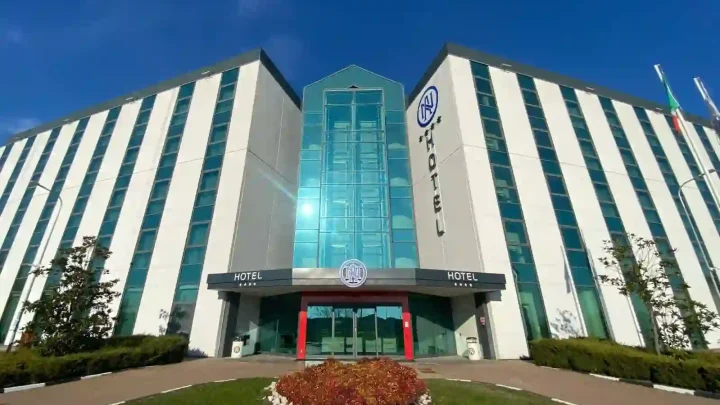
AN Hotel Milano San Donato is a four-star property near the Santa Giulia area and the Arena. Its rooms feature contemporary furnishings, Wi-Fi and a breakfast designed to suit a wide range of tastes, including the most discerning. Its proximity to main roads and metro connections makes getting around easier. The hotel offers private, on-site parking, convenient for guests arriving by car. For a gourmet dinner, the hotel’s Ristorante Privé awaits.
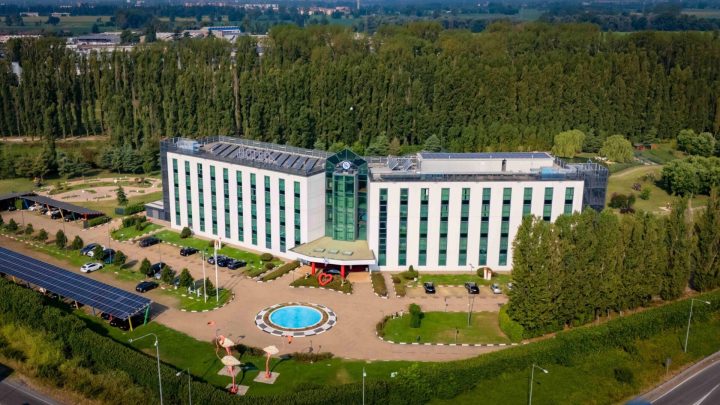
AN Park Hotel Milano Settala is the flagship of the collection. Set within a large park with an outdoor swimming pool, children’s play area and minigolf course, it offers a balance between high-quality hospitality and relaxation. Spacious meeting rooms and elegant event spaces lend themselves to corporate meetings, hospitality for major events and private evenings. Private, on-site covered parking makes arriving by car more convenient. Here, days end with aperitifs in the park and elegant dinners at Ristorante Privé.
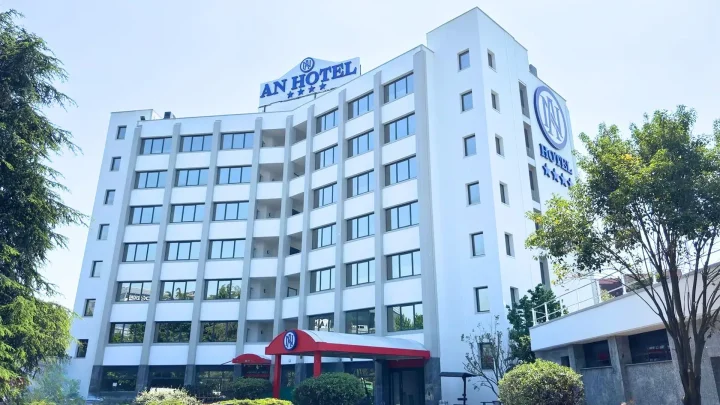
AN Hotel Milano Melegnano is ideal for guests who wish to stay away from the bustle without giving up access to Milan and the main roads. Convenient access, private, on-site parking and functional rooms make it easier to rest after busy days.
Discover the world of AN Hotels and continue exploring the Magazine for insights, travel advice and guides to venues. The team is available to help you choose the hotel best suited to your style of stay.
What are you waiting for? Book your experience now: info@an-hotels.com – +39 02 97071337
👉 Check availability and book now with AN Hotels
AN Hotels venues: excellence in Italian hospitality
AN Hotels brings together three 4-star hotels in the eastern and southern metropolitan areas of Milan, designed for those travelling for major events, work or pleasure. Three different structures, one common thread: a warm welcome, precise organisation and services designed to make every guest feel special.


AN Hotel Milano San Donato **** is a 4-star hotel located close to the Santa Giulia area and the Unipol Dome-Arena. Quiet rooms, contemporary furnishings, fast Wi-Fi and a breakfast designed to satisfy even the most demanding palates. Its proximity to the main roads and underground connections allows you to get around quickly and easily. The hotel has private, on-site parking, convenient for those arriving by car. For a gourmet dinner, the Privé restaurant inside the hotel awaits you.


AN Park Hotel Milano Settala **** is the jewel in the crown of the collection. Set in a large park with an outdoor swimming pool, children’s area and mini golf course, it offers the perfect balance between high-end hospitality and authentic relaxation. The park also features a fitness trail for outdoor exercise. The spacious meeting rooms and elegant event spaces make it perfect for business meetings, hospitality during major events and private evenings. Private, on-site also with covered parking makes arriving by car more convenient. Here, the days end with aperitifs in the park and elegant dinners in the Privé gourmet restaurant. The hotel has an in-house gym for its guests.


AN Hotel Milano Melegnano **** is ideal for those who want to stay away from the hustle and bustle, without sacrificing proximity to Milan and the main roads. Easy access, private, on-site parking and functional rooms guarantee true rest after busy days.


Discover the world of AN Hotels and continue exploring the Magazine for insights, travel tips and venue guides. The staff is on hand to help you choose the hotel that best suits your style of stay.
What are you waiting for? Book your experience now! info@an-hotels.com – +39 02 97071337