San Michele in Pavia: sublime example of Lombard Romanesque architecture
The Church of San Michele in Pavia, a jewel of Lombard Romanesque architecture, is one of the city’s most emblematic monuments. Built between the 11th and 12th centuries, this church is an important testimony to Italian medieval culture and art.
History of the church of San Michele Maggiore in Pavia
The building of the church of San Michele Maggiore began in the 11th century and continued for several decades. Located in the heart of Pavia, the church has witnessed many historical events, including several coronations of kings and emperors of the Holy Roman Empire. Its strategic location and its religious and political importance have contributed to making it a crucial landmark for the community.
Architecture
San Michele Maggiore is a perfect example of Lombard Romanesque architecture. The sandstone façade, characterised by numerous sculpted decorations, is one of the church’s most distinctive features. The three-nave interior is supported by massive columns and decorated with frescoes and bas-reliefs telling biblical stories and local legends. Every architectural detail reflects the skill and craftsmanship of the artisans of the time.
Works of Art inside the church of San Michele
Numerous works of art can be admired inside the church, including frescoes and sculptures of considerable artistic value. Prominent among these are the ‘St Michael Crucifix’, a wooden sculpture from the 13th century, and various frescoes adorning the walls of the aisles and chancel. Each work of art in the church contributes to creating an atmosphere of sacredness and timeless beauty.
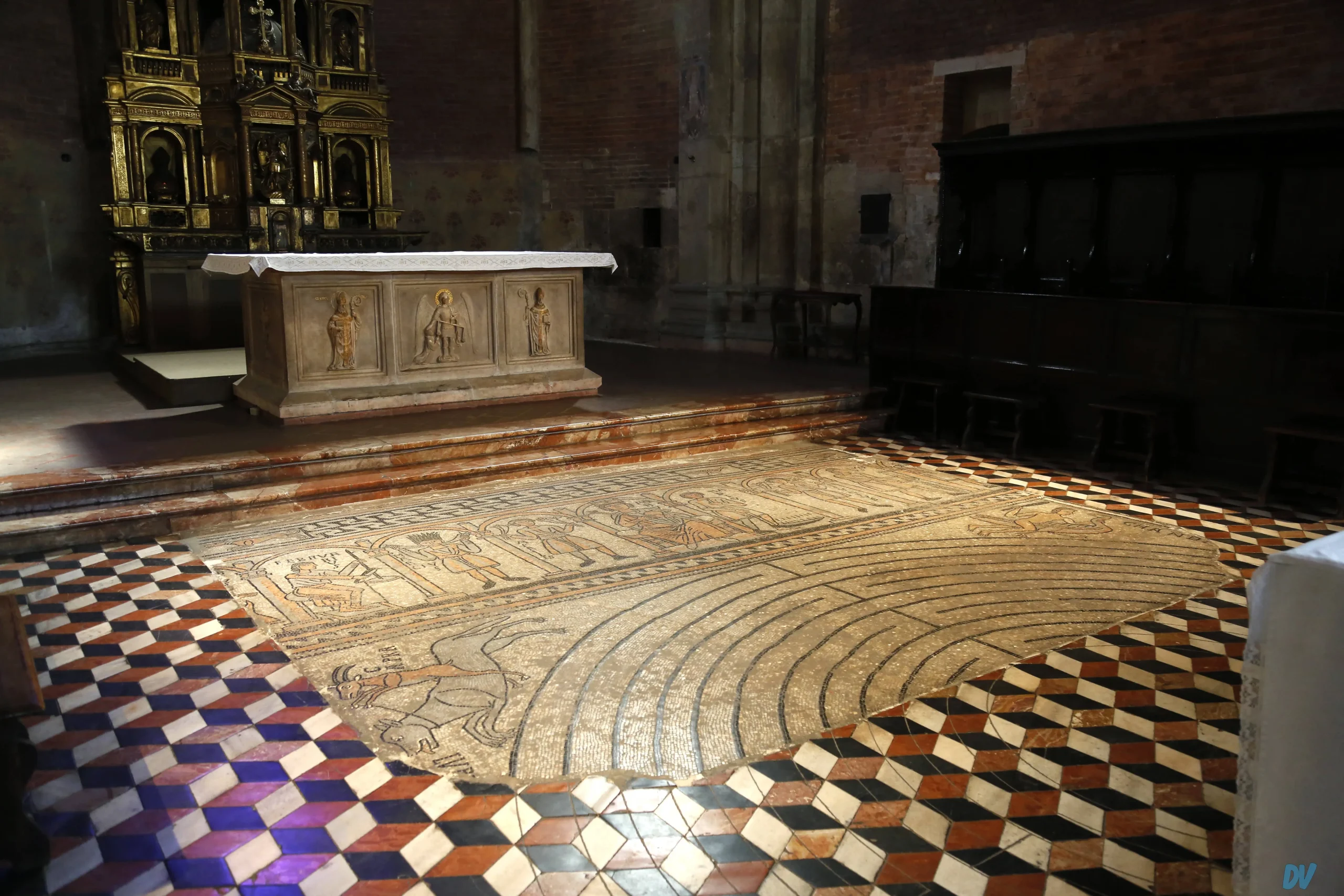
Basilica di san michele maggiore in pavia, view of the inside and the altar
Acknowledgements and studies
San Michele Maggiore has been the subject of numerous studies by art historians and architects from all over the world. Its architecture and decorations have been analysed and described in many academic publications, making it an important reference point for the study of Lombard Romanesque architecture. Moreover, the church has been recognised as a cultural heritage of great value and continues to attract visitors and scholars from all over the globe.
Curiosities
One of the most fascinating curiosities related to the Church of St Michael is the legend that it was built on an ancient pagan place of worship. Some archaeological findings seem to support this hypothesis, adding a further layer of mystery and fascination to the church’s history. Moreover, during the Middle Ages, the church is said to have been a place of pilgrimage for those seeking healing and protection.
Lombard Romanesque: characteristics and peculiarities
Lombard Romanesque is an architectural style that developed in Lombardy from the 11th century onwards and is distinguished by a number of distinctive features that reflect the skill of the craftsmen and the influence of artistic currents of the time.
Materials and construction techniques
One of the most distinctive features of Lombard Romanesque architecture is the use of local materials such as sandstone and brick. These materials give the structures a robust and massive appearance, characterised by thick and solid walls. The construction techniques employed include the use of round arches, barrel vaults and domes that guarantee stability and durability.
Decorations and sculptures
Romanesque churches in Lombardy are often richly decorated with sculptures and bas-reliefs adorning façades, portals and capitals. These decorations depict biblical scenes, figures of saints, fantastic animals and geometric motifs. Lombard craftsmen were particularly skilled at creating intricate details that tell stories and legends through stone.
Facades and portals
The façades of Lombard Romanesque churches are generally simple and austere, but embellished with decorative elements such as rose windows, pilasters and hanging arches. Portals are often sculpted with scenes from the life of Christ or the saints, and represent an element of great visual and symbolic impact.
Interiors and sacred spaces
The interior of Lombard Romanesque churches is usually divided into three naves, with massive columns supporting the barrel vaults. The sacred spaces are lit by small splayed windows that create an atmosphere of recollection and devotion. The high altar is often richly decorated and placed in a central position dominating the entire building.
Representative examples of Romanesque Lombard Churchs
Besides the church of San Michele in Pavia, other notable examples of Lombard Romanesque architecture include the Basilica of Sant’Ambrogio in Milan, the Duomo in Modena and the Basilica of San Zeno in Verona. These buildings share the distinctive features of Lombard Romanesque, but each also has unique elements reflecting local specificities and regional influences.
Lombard Romanesque represents a fundamental phase in the history of Italian architecture, characterised by a great variety of forms and decorations. The churches built in this style are precious testimonies to a period of great artistic and religious fervour, and deserve to be studied and preserved with care.
Mysteries and Secrets of San Michele in Pavia
The Church of San Michele in Pavia is shrouded in a series of legends and mysteries that add further fascination to this historical monument. One of the most fascinating tales concerns the underground crypt of the church, which is said to house ancient relics and buried secrets. According to legend, during the construction of the church, workers found a hidden crypt containing artefacts and relics of saints, which were then hidden again to protect them from barbarian invasions (Source).
Another anecdote concerns the ‘Portal of the Monks’, one of the three main portals of the church. It is said that this portal was used exclusively by the monks who guarded the church and was endowed with symbols and secrets hidden in its sculptural decorations (Source). Scholars believe that these symbols may represent ancient rituals and arcane knowledge passed down through the centuries.
Finally, there is the legend of the ‘Floor Labyrinth’, an intricate design found in the chancel of the church. It is said that the labyrinth was used by pilgrims as a tool for meditation and spiritual reflection, and that whoever managed to find the centre of the labyrinth would obtain a divine vision or mystical revelation (Source).
These stories, although not scientifically documented, add an element of mystery and fascination to the history of the Church of San Michele in Pavia, making it even more fascinating for visitors and scholars.
The Church of San Michele in Pavia is a treasure of inestimable historical and artistic value. Its preservation is essential to keep the memory of our culture alive and to transmit the beauty and mastery of Lombard Romanesque art to future generations.
Plan your stay to visit the Church of San Michele in Pavia
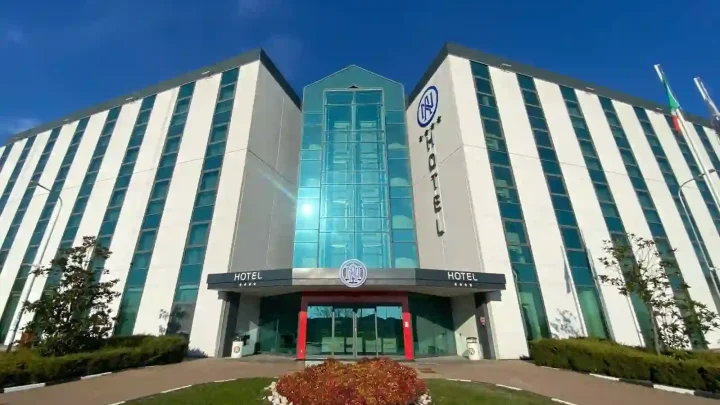
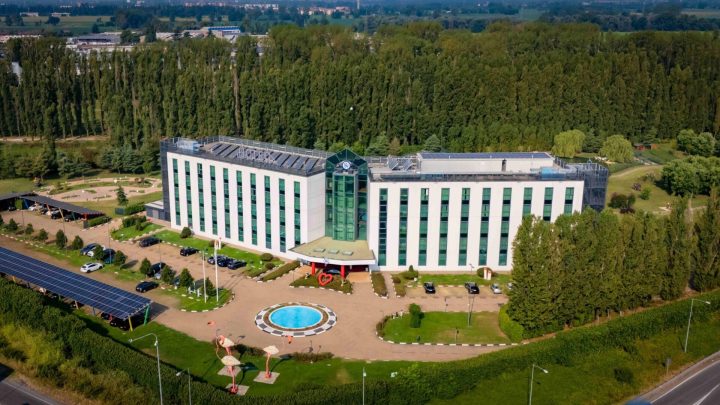
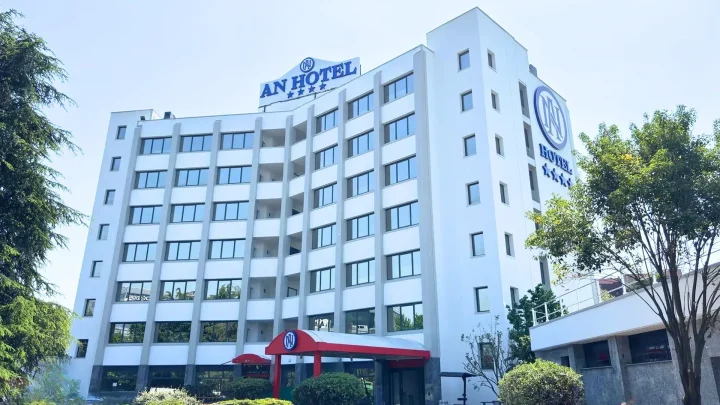
If you are planning a visit to Pavia to discover the magnificence of the Church of San Michele and the city’s other treasures, AN Hotel Melegnano is the ideal choice for your stay. Located just a few kilometres from Pavia, this hotel offers comfort and convenience for cultural travellers. Its strategic location makes it a perfect base for exploring not only Pavia, but also the Milan metropolitan area. Take advantage of AN Hotel Melegnano‘s affordable rates and excellent services to make your trip even more memorable.
AN Hotels: your starting point for discovering Milan
Staying at AN Hotels in Milan, you will be in the thick of the celebrations in the city. Our comfortable rooms and top-notch staff will ensure you have a pleasant stay, while you immerse yourself in the spirit of Milan.

Hall and reception of our an hotel, milano est settala, luxury hotel near milan linate international airport
Stay in Milan with AN Hotels
Why not make your trip an even more special experience by staying at AN Hotels? Our location close to the city centre, yet away from the hustle and bustle and immersed in silence, will allow you to easily reach all the events and nightlife venues in Milan, while our comfortable rooms and excellent service will make your stay in Milan a pleasure. Don’t forget our four star luxury AN Park Hotel Settala, near the international airport of Milan Linate, which is ideal for a relaxing stay with its park and open air swimming pool.
Experience Milan with AN Hotels
Milan is the living stage for a trip to the top. Join us at AN Hotels to celebrate the change taking place and discover all that Milan has to offer.
Come to Milan and book your stay at AN Hotels. You will live a unique cultural experience, immersed in the charm and history of the city of Milan. Don’t wait, book your AN Hotels room today!
AN Hotel Milano Melegnano
Email: info@an-hotels.com
Phone: +390280012312
Address: Via Don Dossetti, 2 Carpiano, Milano 20074