Via Mozart: a bridge between past and present in the heart of Milan
In the urban fabric of Milan, a city where modern and ancient blend in a continuous dialogue, there is one street that stands out for its historical and cultural uniqueness: via Mozart. This street is not only one of the most elegant places in the metropolis, but also represents a symbol of ‘cultural resistance’, being the only street to retain the name of an Austrian after the unification of Italy. The history of via Mozart is a fascinating journey through time, allowing us to explore Milan’s Austrian heritage and the deep connection between the famous composer Wolfgang Amadeus Mozart and the Lombard city.
The ‘resistance’ of Via Mozart
After the unification of Italy, there was a strong movement to eliminate street names reminiscent of the period of Austrian rule, in an attempt to strengthen Italian national identity. However, Via Mozart resisted this change, keeping alive the memory of Austria and its most illustrious composer, Wolfgang Amadeus Mozart. This resistance is not just a matter of street nomenclature, but reflects the deep cultural and historical connection between Milan and Austria, also visible in other aspects of city life, such as architecture and gastronomy.
A tribute to the genius of Mozart
Via Mozart, with its elegant palazzi and the historic Villa Necchi Campiglio, is not only a tribute to the composer’s memory, but also a symbol of his influence and love for Milan. Mozart first visited the city at the age of 14 and was deeply impressed by its beauty and cultural vibrancy. During his stays, he composed significant works and performed in prestigious theatres, leaving an indelible mark on Milan’s musical history.
Mozart’s Love for Milan
Mozart’s bond with Milan was not only professional, but also emotional. The composer repeatedly expressed his desire to settle in the city, attracted by its cultural effervescence and the warm welcome he received. Although his plans to settle in Milan never came to fruition, the city still preserves the memory of his performances and compositions, celebrating his genius through the street that bears his name.
Via Mozart in Milan is more than just a street: it is a bridge between the past and the present, a place of memory that celebrates the indissoluble bond between the Austrian composer and the Lombard city. Walking along via Mozart, the Milanese and visitors can feel Mozart’s presence and legacy, which continues to influence the city’s cultural life. In a rapidly changing world, via Mozart remains a symbol of continuity and deep respect for history and the figures who helped make it great.
Via Mozart is located close to Corso Venezia, right in the centre, in the beating heart of Milan’s historical centre. Via Mozart is a short street, but full of history, dotted with palaces of great importance and villas built between 1910 and 1930. These include Palazzo Berri-Meregalli, designed by architect Arata, the sumptuous Villa Necchi-Campiglio and the elegant Villa Zanoletti, known today as Villa Mozart, both designed by architect Piero Portaluppi.
The Via Mozart district is a veritable treasure trove of architectural treasures that tell the story of Milan’s history and innovative spirit during the period between the two world wars. The works of architecture on this street offer a unique opportunity to immerse oneself in the aesthetics and details of the buildings of a bygone era, yet still vibrant and relevant today.
Each building tells a unique story, both through the architectural mastery that shaped its lines, and through the people who lived and lived there. These sumptuous residences represent a cultural heritage of inestimable value for the city of Milan, and bear witness to the talent and creativity of the artists and craftsmen who conceived and realised them.
The walk along Via Mozart thus becomes a journey through time, an opportunity to be fascinated by the timeless beauty of these historic stately homes and to appreciate the impact they have had on the transformation and evolution of the city over the decades.
The eclectic charm of Palazzo Berri Meregalli in Milan
The Palazzo Berri-Meregalli perfectly embodies the eclecticism that characterised early 20th century architecture in Milan. Built between 1911 and 1913 by the designer Giulio Ulisse Arata, this building is surprising for its extraordinary fusion of styles: from Romanesque through Gothic to Renaissance, all enriched with Art Nouveau details that give the structure a unique monumentality. The interiors, enriched with pictorial decorations, mosaics by Adamo Rimoldi and Angiolo D’Andrea, and wrought iron designed by Alessandro Mazzucotelli, speak of a Milan at the height of its artistic beauty, where every detail reconstructs pieces of the city’s history.
Today, the Palazzo remains a private property, still preserving its original residential function. Located at 8 Via Cappuccini, very close to Via Mozart, it represents one of Milan’s many hidden gems and offers a fascinating insight into the architectural trends of the time and how they were interpreted and fused together in a uniquely Milanese context.
An eclectic jewel in the heart of Milan: Casa Via Mozart 17
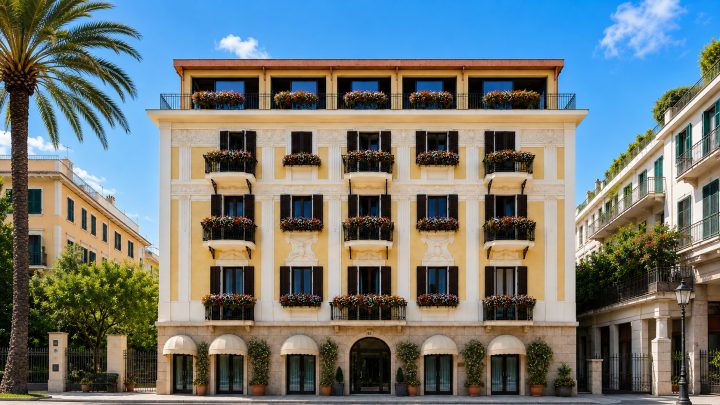
In the beating heart of Milan, at number 17 Via Mozart, stands a residence that captures the essence of eclectic architecture of the early 20th century.
Built in 1911, this building is an emblematic example of how architecture for residential, tertiary and service purposes has evolved over time, combining classical and modern elements in a harmonious whole.
The symmetrical and richly decorated façade features a mixture of rusticated motifs on the ground floor and pilasters of a giant order rising up the two noble floors, culminating in an attic with a loggia. Art nouveau details are omnipresent: from the wrought iron railings of the balconies to the festoons and coats of arms adorning the building, each element contributes to an atmosphere of elegant beauty.
Inside, the atrium, staircase and rooms retain the same rich decorations as the façade, with some coffered ceilings adding an extra touch of refinement. Despite the passage of years, this architectural work continues to serve as a dwelling, maintaining its historical charm intact.
Casa Via Mozart 17 is more than a building; it is a testimony to the cultural richness of Milan, an ever-changing city that does not forget its roots.
Villa Zanoletti: architectural jewel of Milan
In the heart of Milan, precisely at 9 Via Mozart, stands a pearl of rare beauty and historical value: Villa Zanoletti. Built in 1926 to a design by architect Aldo Andreani, and also called Villa Mozart, this structure represents an emblematic example of the residential architecture of the time.
Characterised by a unique structural configuration that includes fascinating propylaea used as a gatehouse, Villa Zanoletti attracts attention not only for its grandeur, but also for its history. From the time of its construction to the present day, the villa has maintained its function as a dwelling, thus testifying to its continuity of use over time.
The building is also distinguished by its specific typology that classifies its nobility, identified as a ‘villa’, a designation that carries with it the echo of a different Milan, a witness to the city’s social and urban changes.
Aldo Andreani’s work, located in what is now one of the most exclusive areas of Milan, remains a significant example of early 20th-century residential architecture, still retaining its charm today thanks to its integrity and persistent use as a private residence.
Despite its nature as a private property, Villa Zanoletti continues to nurture the interest of historians, architects and lovers of architectural beauty, and represents an important chapter in the quality itineraries that can be travelled in the centre of Milan.
Villa Necchi Campiglio: an icon of elegance and modernism in Milan
In the beating heart of Milan, stands a monument of rare beauty and architectural ingenuity: Villa Necchi Campiglio. Built between 1932 and 1935 to a design by architect Piero Portaluppi, the villa represents a unique fusion of rationalism and 20th-century style, enriched with art déco elements that make it an authentic total work of art.
This extraordinary residence, surrounded by a lush garden and equipped with modern amenities such as a heated swimming pool and tennis court, was commissioned by the Necchi Campiglio sisters, icons of Milanese high society. Their vision allowed for the creation of a homely ambience that, at the same time, served as an ideal venue for the reception of guests, in perfect synthesis with the worldly spirit of the city.
Today, the villa is open to the public as a house-museum, thanks to the ownership of architect Portaluppi’s foundation, offering visitors the opportunity to immerse themselves in a piece of Milanese history, where beauty, art and design meet in a continuous and fascinating dialogue.
Discovering Italy’s first ‘intercom’ in Milan
Also in the Corso Venezia district and a stone’s throw from Via Mozart, hidden among the streets of the centre, at Via Serbelloni 10, is a curious bronze sculpture: a large ear representing Italy’s first ‘intercom’. Created in the 1930s by Adolfo Wildt, a famous exponent of Art Noveau, this particular work of art is located on Via Serbelloni next to the entrance to Palazzo Sola Busca, better known as ‘Cà dell’oreggia’. Wildt, a well-known but often underestimated artist, was able to fuse classical-modernist sculptural techniques to create a unique piece.
This striking intercom not only has a decorative function but was used to communicate with the building’s doorman, perfectly embodying Milan’s innovative and visionary spirit. The sculpture attracts curious onlookers and tourists, fuelling the urban legend that whispering a wish in the ear can bring it to fruition.
AN Hotels: your starting point for discovering Milan
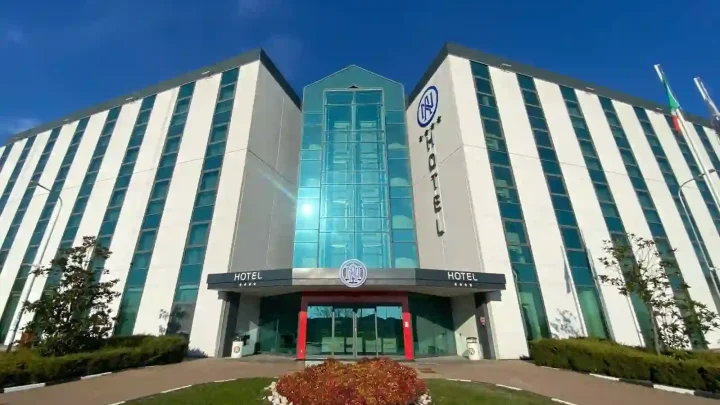
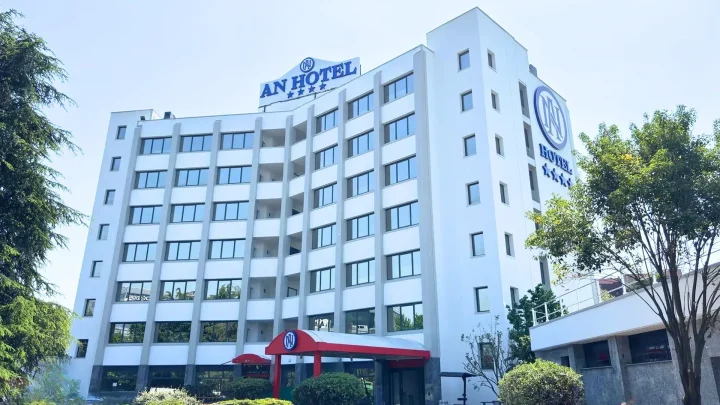
Staying at AN Hotels in Milan, you will be in the thick of the celebrations in the city. Our comfortable rooms and top-notch staff will ensure you have a pleasant stay, while you immerse yourself in the spirit of Milan.

Hall and reception of our an hotel, milano est settala, luxury hotel near milan linate international airport
Stay in Milan with AN Hotels
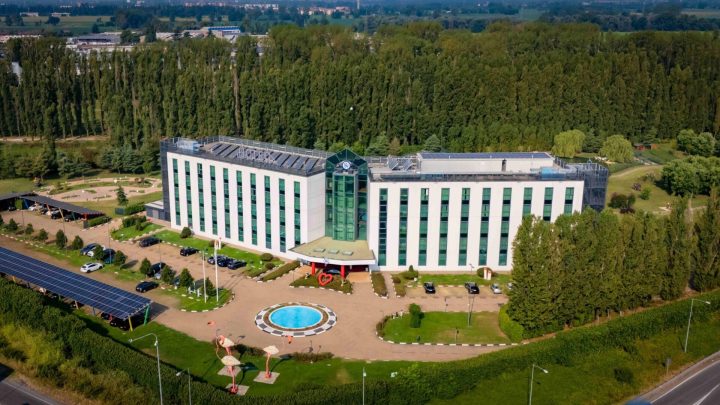
Why not make your trip an even more special experience by staying at AN Hotels? Our location close to the city centre, yet away from the hustle and bustle and immersed in silence, will allow you to easily reach all the events and nightlife venues in Milan, while our comfortable rooms and excellent service will make your stay in Milan a pleasure. Don’t forget our four star luxury AN Park Hotel Settala, near the international airport of Milan Linate, which is ideal for a relaxing stay with its park and open air swimming pool.
Experience Milan with AN Hotels
Milan is the living stage for a trip to the top. Join us at AN Hotels to celebrate the change taking place and discover all that Milan has to offer.
Come to Milan and book your stay at AN Hotels. You will live a unique cultural experience, immersed in the charm and history of the city of Milan. Don’t wait, book your AN Hotels room today!
AN Hotel Milano Melegnano
Email: info@an-hotels.com
Phone: +390280012312
Address: Via Don Dossetti, 2 Carpiano, Milano 20074
AN Park Hotel Milano Settala
Email: info@an-hotels.com
Phone: +3902839901
Address: Via delle Industrie, Snc, 20090 Milano