Where to eat pizza in Milan: styles, neighbourhoods and ideas
Asking where to eat pizza in Milan may seem like a simple question. In reality, today it almost requires choosing a side.
The city offers Neapolitan pizzerias, contemporary pizzas, Roman-style round pizzas, crisp tray-baked slices, wholemeal doughs, alternative flours and gluten-free options. Alongside more informal venues, restaurants have emerged where pizza is treated with the same care as a gastronomic menu, with carefully studied fermentation, selected ingredients and less predictable combinations.
The choice, therefore, does not depend on quality alone. The type of pizza matters, but so do the neighbourhood, the atmosphere and the kind of evening you would like to organise.
A soft pizza with a pronounced crust works well for a convivial dinner. A contemporary interpretation can become a more structured experience. Pizza by the slice is ideal for a quick break or for those wishing to try different flavours, while a thin, crisp base caters to completely different preferences.
The area also plays its part. Porta Romana and Isola suit those who want to combine pizza with a more refined evening. Viale Bligny and Città Studi retain a university atmosphere and an informal character. The Navigli and Corso Sempione place dinner within a broader evening of aperitifs, walking and nightlife.
This guide does not offer a ranking of Milan’s best pizzerias. That would be of limited use and would become outdated quickly. Its aim is to help readers navigate styles, doughs and neighbourhoods, choosing the option that best matches their tastes and the kind of experience they are looking for.
Milan has become a city of pizza
Milan does not have a historic pizza tradition comparable to those of Naples or Rome. Yet in recent years, it has become one of the Italian cities offering the greatest variety of styles and interpretations.
Several factors have encouraged this growth. Pizza makers from different regions have brought their own techniques, doughs and traditions. At the same time, Milanese diners have begun paying closer attention to the quality of flour, fermentation times, perceived digestibility and the origin of ingredients.
Pizza has therefore ceased to be regarded only as a simple and quick option. It naturally continues to serve that purpose, but today it can also become the focus of a more carefully constructed dinner, with attentive service, a well-considered drinks list and greater care devoted to the setting.
This evolution has created a very broad scene. Traditional pizzerias coexist with contemporary venues, formats specialising in pizza by the slice, establishments devoted to crisp doughs and restaurants that treat each pizza as a complete dish.
The advantage for visitors to Milan is the freedom to choose. There is no single dominant approach and no need to adapt to the style of the most famous venue. Diners can seek a simple, recognisable and well-executed pizza, or a more creative and experimental proposal.
Quality, however, does not automatically depend on complexity. A well-balanced Margherita can be more convincing than a pizza overloaded with ingredients. Similarly, a lengthy description of the dough does not necessarily guarantee a better result.
Milan now offers many credible interpretations of pizza precisely because it does not have to defend a single local tradition. The city absorbs different languages, places them in dialogue and allows diners to choose between simplicity, experimentation, crispness, softness and gastronomic influences.
To find the right option, the first step is therefore to understand which style you prefer. Only then does it make sense to choose the neighbourhood and the venue.
Neapolitan pizza: soft, with a high crust and rapid cooking
Neapolitan pizza is now one of the most widespread styles in Milan. It is recognisable by its soft dough, thin centre, pronounced crust and very rapid cooking at a high temperature.
It is an immediate and convivial pizza, intended to be eaten as soon as it leaves the oven. Its soft and slightly elastic structure makes it very different from crisper versions, while the raised crust contributes noticeably to its overall texture.
To understand whether a pizzeria works well, it is often useful to begin with the simplest varieties. Margherita and Marinara make it possible to assess the balance between dough, tomato, mozzarella, oil and cooking without more elaborate toppings obscuring the result.
Milan offers many different interpretations of Neapolitan pizza. Some remain faithful to a more traditional style, while others place greater emphasis on the crust, the open crumb or the use of particular ingredients.
There is no need, however, to enter the endless debate about what constitutes “real” Neapolitan pizza. For those choosing where to eat, the more useful question is much simpler: do you prefer a soft pizza, moist in the centre and intended to be eaten quickly, or a drier and crisper texture?
Neapolitan pizza works well for an informal dinner, groups of friends and anyone seeking a recognisable experience without excessive formality.
Contemporary pizza: doughs, research and ingredients
Contemporary pizza is based on greater attention to research into doughs, fermentation and the selection of ingredients.
Compared with more traditional pizza, it often features a more developed crust, more pronounced textures and toppings designed according to a culinary logic closer to restaurant cooking. Seasonal toppings, less conventional combinations and more carefully considered presentation are not unusual.
The service changes too. Pizza may form part of a more complete gastronomic experience, with starters, selected drinks and greater attention to the surroundings.
This often results in a higher price, but does not automatically mean better quality. Contemporary pizza is simply a different style, suitable for those who want to experiment and consider pizza the centrepiece of a more structured dinner.
In some cases, the risk is that experimentation becomes excessive. Too many ingredients, complicated descriptions and doughs presented as alchemical formulas can move away from the simplicity that makes pizza so effective.
The best approach remains one in which technique and ingredients work together without overloading the result. A well-constructed contemporary pizza should be interesting, but also easy to understand.
In Milan, this style is found particularly in neighbourhoods with a young adult, professional audience that pays close attention to dining. It suits couples, small groups and those seeking a more refined evening than the classic neighbourhood pizzeria.
Roman-style pizza, tray-baked slices and crisp doughs
Those who prefer a drier and crisper texture can choose Roman-style pizza, tray-baked pizza or other doughs designed around friability and crunch.
Roman-style round pizza is generally thin, well cooked and crisp right to the edge. It offers a very different experience from the softness of Neapolitan pizza and is often appreciated by those who do not enjoy very soft doughs or pronounced crusts.
Tray-baked pizza, by contrast, works well for a quicker break or an informal tasting. The opportunity to choose several varieties makes it possible to sample different toppings without ordering a whole pizza.
Here too, quality depends on balance. A crisp base should not become dry, just as the quantity of topping should not compromise the structure of the dough.
This style works well for quick lunches, informal dinners and evenings when pizza is not necessarily the only central element. It is also a good choice for those who enjoy sharing and trying several combinations.
The presence of different styles demonstrates how broad Milan’s pizza scene has become. There is no universally superior texture: softness, crispness and perceived lightness depend on personal taste and the type of experience desired.
Less refined flours, alternative doughs and gluten-free pizza
In recent years, many pizzerias have expanded their offering with less refined flours, wholemeal and multigrain doughs, or mixtures made from grains other than traditional wheat.
These options can change the taste, texture and aromatic profile of a pizza. Dough made with less refined flour tends to have a more pronounced flavour, while multigrain blends can introduce more rustic notes and a different structure.
It is important, however, to avoid oversimplification. Less refined flour does not automatically make a pizza lighter, easier to digest or suitable for everyone. The quality of the result depends on the overall balance between the dough, preparation, fermentation, cooking and toppings.
Gluten-free pizza is a separate matter. Anyone looking for a pizzeria suitable for people with coeliac disease should consider not only the availability of a specific dough, but also the preparation methods.
The description “gluten free” does not in itself guarantee that the pizza is suitable for someone with coeliac disease. It is necessary to check whether the venue uses separate preparation areas, dedicated utensils, specific procedures and systems designed to reduce the risk of cross-contamination.
Google Maps can be a very practical tool for local searches. By enabling location services and searching for expressions such as “pizzeria for coeliacs”, “gluten-free pizza” or “gluten-free pizzeria”, users can identify nearby venues and compare:
- distance;
- opening hours;
- photographs;
- recent reviews;
- comments specifically concerning the gluten-free offering;
- responses posted by the owners or managers.
Reviews can help narrow down the options, particularly when they describe the preparation methods and the experience of people with coeliac disease in detail. They should not, however, replace direct verification.
Before booking, it is always advisable to contact the pizzeria and ask about the handling of the dough, cooking methods and the risk of contamination. Some venues also require guests to request gluten-free pizza in advance.
In this way, Google Maps becomes a useful tool for navigating local results, while the final confirmation remains dependent on direct communication with the pizzeria.
Porta Romana and Viale Bligny: pizza between neighbourhood life and a university crowd
Porta Romana and Viale Bligny offer two experiences that are geographically close, but differ in atmosphere and audience.
Porta Romana has a more varied gastronomic scene. Alongside traditional pizzerias, there are contemporary venues, carefully designed restaurants and proposals suited to a more structured dinner. It is a particularly interesting area for those wishing to combine pizza with an aperitif, a walk or a performance at Teatro Carcano.
Between Via Muratori, Via Crema, Viale Montenero and the surrounding streets, it is possible to find venues frequented by residents, professionals and couples. The atmosphere is lively, but generally less chaotic than in the busiest nightlife areas.
Viale Bligny and the Bocconi area, by contrast, retain a more university-oriented character. The presence of Italian and international students encourages informal pizzerias, prices that are often more balanced and venues suitable for groups of friends.
Here, pizza fits easily into a spontaneous evening: an aperitif, dinner and perhaps a second venue, without the need for too much planning.
The two areas work well precisely because they allow diners to choose between a more refined evening and a more informal one, while retaining a good variety of styles and price ranges.
Città Studi: informal pizzerias and everyday Milan
Città Studi is one of the most natural areas in which to eat pizza without turning the evening into an overly elaborate occasion.
The university presence keeps the neighbourhood young, lively and practical. Pizzerias serve students, residents and professionals, so they need to offer consistency, clear pricing and options suitable for both lunch and dinner.
Traditional pizzas, tray-baked slices, crisp doughs and informal venues work particularly well here. The atmosphere is less scenic than along the Navigli or in Porta Venezia, but for precisely this reason it often feels more authentic.
Città Studi suits groups of friends, families and anyone wishing to eat well without turning pizza into an event.
Isola and Porta Venezia: contemporary pizza and an international crowd
Isola is a good choice for those seeking more refined venues, contemporary doughs and an evening that can continue among bistros, cocktail bars and wine bars.
The crowd is young adult and professional, while the atmosphere remains urban and intimate. Pizza can be the centre of the dinner or form part of a broader route including drinks and a walk towards Porta Nuova.
Porta Venezia, by contrast, offers a more international scene. The neighbourhood is accustomed to gastronomic variety and hosts modern venues, creative proposals and less conventional formats.
It suits those wishing to combine pizza, nightlife and multiculturalism. After dinner, it is easy either to remain in the neighbourhood or to move towards the centre.
In both areas, the value lies not in finding “the best pizza”, but in enjoying a more contemporary experience that reflects the character of the neighbourhood.
Along the Navigli, pizza often forms part of an evening built around an aperitif, walking, socialising and nightlife.
The choice is broad, but it is advisable not to decide solely according to a location beside the canal. Side streets and venues also frequented by residents may offer a more balanced experience.
Corso Sempione and Arco della Pace, by contrast, offer a more orderly and professional evening. The area suits couples, groups and those wishing to combine an aperitif, pizza and a walk.
In both cases, the neighbourhood matters as much as the pizza. Dinner works better when it is part of a coherent evening, without unnecessary travel and without choosing a venue simply because it occupies the most photographed location.
How to recognise a good pizzeria without relying on rankings
Rankings can offer some inspiration, but they are rarely enough to identify a pizzeria suited to individual tastes.
The menu is a useful first indicator. When it is excessively long, confusing or built around dozens of combinations, it becomes more difficult to understand the venue’s real identity. A more readable offering makes it easier to recognise the style of the dough, the type of ingredients and the gastronomic concept.
Simpler varieties also help assess the result. Margherita and Marinara clearly reveal the balance between dough, tomato, mozzarella, oil and cooking. If these elements work, it is more likely that the more elaborate pizzas will also retain a sound structure.
Other useful factors to observe include:
- clarity about the type of dough;
- consistency between base and toppings;
- recognisable ingredients;
- even cooking;
- a regular clientele;
- consistency in reviews over time.
Reviews are particularly useful when they describe tangible details. Generic comments such as “excellent pizza” provide limited assistance, while observations about the dough, service, noise, waiting times and texture help determine whether the venue suits the evening being planned.
The clientele matters too. A pizzeria frequented by residents and guests who return regularly often provides a more reliable indication than one chosen almost exclusively for its location.
There is no need, however, to become a sommelier of pizza crusts. A good pizza should first of all be balanced, enjoyable and consistent with the style it claims to offer.
Which pizza to choose according to the evening
The choice depends on taste, but also on the type of experience desired.
Neapolitan pizza suits a convivial, informal and immediate dinner. Contemporary pizza works better when seeking a more refined evening, with elaborate toppings and service closer to restaurant dining.
Roman-style pizza is suitable for those who prefer a thin, crisp texture, while tray-baked pizza allows diners to try several flavours and works well for a quick break.
The neighbourhood can also guide the choice:
- Porta Romana and Isola for a more structured dinner;
- Città Studi and Viale Bligny for informality and more balanced prices;
- Porta Venezia for contemporary proposals and an international audience;
- Navigli for a lively and social evening;
- Corso Sempione for combining pizza, an aperitif and a walk.
There is therefore no single solution suitable for everyone. A simple pizza in an informal venue may be perfect for an evening with friends, while a more elaborate dough can make sense when dinner is the centre of the experience.
Pizza and neighbourhoods: avoiding a pizzeria chosen only because it is central
Being close to the Duomo, the Navigli or a major attraction does not automatically guarantee good pizza.
The busiest areas offer plenty of choice, but can favour venues that depend mainly on occasional passing trade. For this reason, it is worth observing the menu, clientele and consistency of the venue before allowing location alone to guide the decision.
Side streets, university districts and residential areas can offer more convincing experiences. Not because they are necessarily better, but because they need to respond to a public that returns and evaluates the venue over time.
The right pizzeria is one that fits well into the rest of the evening. A venue close to a theatre, an aperitif area or a neighbourhood that is pleasant to explore may offer a more complete experience than an address chosen merely because it appears first on the map.
Where to stay when exploring Milan’s pizza scene
To experience Milan’s gastronomic scene without necessarily staying in the historic centre, it can be useful to choose a well-connected and quieter base.
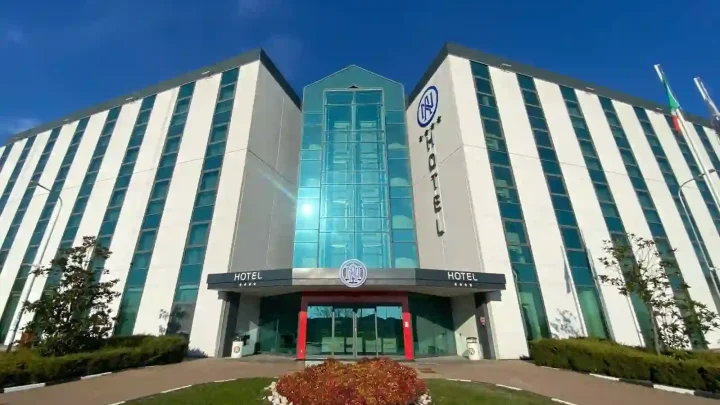
The three AN Hotels properties in the metropolitan area are:
- AN Hotel Milano San Donato ★★★★
- AN Park Hotel Milano Settala ★★★★
- AN Hotel Milano Melegnano ★★★★
AN Hotel Milano San Donato is particularly convenient for reaching Porta Romana, Bocconi and the city centre via the M3 underground line. It is a suitable option for those wishing to organise dinner in the city and then return to a quieter area.
AN Park Hotel Milano Settala provides a suitable base for exploring eastern Milan, Città Studi and the city’s eastern districts, with the advantage of returning to green and relaxing surroundings.
AN Hotel Milano Melegnano, meanwhile, is suitable for those travelling by car who wish to combine Milan with the territory to the south while retaining easy access to the main road routes.
The value does not lie in being close to every individual pizzeria, but in choosing the property best suited to the itinerary and means of transport.
A good pizza also tells the story of its neighbourhood
Milan now offers a much broader pizza scene than many people imagine. Neapolitan, contemporary and Roman styles, tray-baked slices, alternative flours and gluten-free proposals coexist in neighbourhoods with different identities.
There is no single pizza that is best for everyone. The choice depends on taste, budget, the type of evening and the atmosphere desired.
A pizzeria can become the starting point for discovering Porta Romana, Città Studi, Isola, Porta Venezia, the Navigli or Corso Sempione. The value of the experience lies not only in the dough, but also in the neighbourhood, the company and the way dinner fits into the evening.
For guests staying at AN Hotels, exploring Milan’s pizza scene means being able to choose between different areas and then return to a convenient, quiet and well-connected four-star base.
Frequently asked questions about where to eat pizza in Milan
Where can you eat good Neapolitan pizza in Milan?
Neapolitan pizza is widespread in many neighbourhoods, including Porta Romana, Isola, Porta Venezia and the Navigli. It is advisable to choose according to the style of the venue and the kind of evening desired.
Which neighbourhoods are best for eating pizza in Milan?
Porta Romana, Città Studi, Isola, Porta Venezia, the Navigli and Corso Sempione offer different experiences, ranging from informal pizza to contemporary interpretations.
Where can you eat pizza in Milan without spending too much?
Città Studi and Viale Bligny are often better suited to a university audience and offer more balanced prices than the central districts.
Is Neapolitan or contemporary pizza better?
It depends on individual taste. Neapolitan pizza is softer, simpler and more convivial, while contemporary pizza places greater emphasis on doughs, experimentation and elaborate toppings.
How can you find a pizzeria for people with coeliac disease in Milan?
Google Maps can be used with location services enabled, searching for “pizzeria for coeliacs”, “gluten-free pizza” or “gluten-free pizzeria”. Before booking, it is always advisable to check directly with the venue which procedures are adopted and how the risk of contamination is managed.
Where should you stay after dinner in Milan?
The AN Hotels properties in San Donato, Settala and Melegnano provide convenient bases from which to experience the city and return to quieter surroundings.
👉 Check availability and book now with AN Hotels
AN Hotels venues: excellence in Italian hospitality
AN Hotels brings together three 4-star hotels in the eastern and southern metropolitan areas of Milan, designed for those travelling for major events, work or pleasure. Three different structures, one common thread: a warm welcome, precise organisation and services designed to make every guest feel special.


AN Hotel Milano San Donato **** is a 4-star hotel located close to the Santa Giulia area and the Unipol Dome-Arena. Quiet rooms, contemporary furnishings, fast Wi-Fi and a breakfast designed to satisfy even the most demanding palates. Its proximity to the main roads and underground connections allows you to get around quickly and easily. For a gourmet dinner, the Privé restaurant inside the hotel awaits you.


AN Park Hotel Milano Settala **** is the jewel in the crown of the collection. Set in a large park with a swimming pool, children’s area and mini golf course, it offers the perfect balance between high-end hospitality and authentic relaxation. The spacious meeting rooms and elegant event spaces make it perfect for business meetings, hospitality during the Olympics and private evenings. Here, the days end with aperitifs in the park and elegant dinners in the Privé gourmet restaurant.


AN Hotel Milano Melegnano **** is ideal for those who want to stay away from the hustle and bustle, without sacrificing proximity to Milan and the main roads. Easy access, convenient parking and functional rooms guarantee true rest after busy days.


Discover the world of AN Hotels and continue exploring the Magazine for insights, travel tips and venue guides. The staff is on hand to help you choose the hotel that best suits your style of stay.
What are you waiting for? Book your experience now! info@an-hotels.com – +39 02 97071337