Milan beyond the Duomo: interesting neighbourhoods to discover
The Duomo, Galleria Vittorio Emanuele II and Castello Sforzesco are essential stops for anyone visiting Milan. Yet limiting a visit to the monumental centre means seeing only one part of the city.
Milan is truly understood by walking through its neighbourhoods. This is where the pace, the people, the architecture, the dining scene and even the way residents occupy urban space begin to change.
Porta Romana reveals an elegant but lived-in Milan, Città Studi shows its university and everyday character, and Ortica preserves a working-class and industrial memory, while Porta Venezia and Via Paolo Sarpi express two different forms of multiculturalism.
There are also areas that are very far apart in atmosphere and identity. Piazzale Loreto and Via Padova represent a complex, popular Milan undergoing transformation. Via Mozart, by contrast, reveals a quiet residential city of remarkable elegance, comparable in atmosphere to the most prestigious districts of major European capitals.
Choosing which Milan neighbourhoods to visit does not therefore require accumulating stops. It is better to understand which side of the city you would like to discover and give it the time it deserves.
Why Milan is best discovered one neighbourhood at a time
Milan does not have a single centre of experience. The historic centre concentrates monuments, museums and major tourist flows, but many of the city’s most interesting identities emerge in residential, university and working-class areas.
Each neighbourhood has a different public, urban language and history. Façades, shops, cafés, markets and even the speed at which people move through the streets all change. Areas located very close to one another can offer completely different experiences.
Exploring Milan one neighbourhood at a time makes it easier to observe these contrasts. Instead of moving quickly from one attraction to another, visitors can spend a few hours in a single area, combining a walk, a cultural visit, lunch and street life.
The underground network makes this kind of visit easier. Neighbourhoods located far apart can be reached quickly and combined into coherent itineraries, although it is still advisable not to include too many areas in the same day.
The quality of the experience often depends on slowing down. Stopping in a bookshop, observing a courtyard, entering a market or choosing a venue frequented by residents can reveal more about Milan than a long sequence of famous places.
The useful question is therefore not “how many neighbourhoods can I see?”, but “which part of Milan would I like to understand today?”.
A city redesigned over the past twenty years
The urban and social character of Milan has changed profoundly over the past twenty years. Expo 2015 represented a clear acceleration: new neighbourhoods, major property developments, infrastructure and international investment made the city more attractive, but also considerably more expensive.
Housing prices have risen sharply, encouraging some residents to move to municipalities within the metropolitan area, where suitable spaces and less prohibitive costs are often easier to find. Economic considerations have been accompanied by traffic, congestion and air quality, which have made surrounding areas a practical choice for many families and workers.
The Municipality of Milan currently has approximately 1.36 million residents, well below the historic peak of more than 1.7 million reached during the 1970s. In practical terms, however, the city has not become smaller: it has expanded beyond its administrative boundaries, reshaping the relationship between the centre, neighbourhoods and the metropolitan hinterland.
This is another reason why reading Milan through its neighbourhoods has become even more important. The transformations have not produced a uniform city, but have intensified differences, contrasts and new centres of activity.
Porta Romana: history, culture and neighbourhood life
Porta Romana is one of the most complete neighbourhoods for anyone wishing to discover Milan beyond its monumental centre.
Corso di Porta Romana retains its connection with the historic city, while the side streets reveal a more residential Milan, characterised by elegant buildings, restaurants, theatres, courtyards and venues frequented by people who genuinely live in the area.
Teatro Carcano is one of the neighbourhood’s main cultural landmarks. Around it, between Via Muratori, Via Crema, Viale Bligny and Viale Montenero, a rich urban life has developed, supported by residents, students and professionals.
Further south, Fondazione Prada and the Scalo di Porta Romana area reveal the contemporary and evolving face of the city. Within a few kilometres, visitors move from historic Milan to its cultural, university and post-industrial dimensions.
Porta Romana also works well for those wishing to create a complete day: a walk, a cultural visit, lunch, an aperitif and an evening performance. It is elegant, but not static. Lively, but generally less chaotic than the city’s busiest nightlife districts.
Città Studi: universities, architecture and everyday Milan
Città Studi is not a monumental neighbourhood in the traditional sense, but it is one of the best places from which to observe everyday Milan.
The presence of the Politecnico, university faculties and a young international population determines the rhythm of the area. During the day, the streets fill with students, researchers and professionals, while in the evening its venues, pizzerias and small restaurants become more informal meeting places.
The architecture alternates university buildings, residential properties, tree-lined avenues and public spaces. No single attraction dominates the visit: the value lies in the overall environment and in the opportunity to observe a neighbourhood that remains genuinely lived in.
Città Studi is suitable for those who enjoy walking without a rigid programme, stopping in a bookshop, choosing a venue frequented by students or simply observing how Milan functions outside areas designed around tourism.
It is also a good starting point for reaching Ortica and Lambrate, creating an itinerary through the eastern part of the city that combines university life, industrial memory and urban transformation.
Ortica: urban memory, murals and working-class identity
Ortica preserves one of the most recognisable identities in eastern Milan. Its history is connected with work, the railway and a working-class dimension that the neighbourhood has not entirely lost, despite the transformations of recent years.
One of its most visible features is the presence of murals depicting people, events and collective memory. Here, urban art does not function merely as decoration, but as a means of reinterpreting the neighbourhood and giving form to a local history that has often remained outside the best-known routes.
Ortica is also interesting because it has not been polished to the point of losing its character. Streets, buildings and spaces remain that still speak of a less glossy Milan, connected with work and neighbourhood life.
It is an area suited to those who enjoy photography, street art and places where the city reveals its historical layers without excessive mediation. Its proximity to Città Studi and Lambrate also makes it possible to create a coherent itinerary through eastern Milan.
Porta Venezia: architecture, culture and an international spirit
Porta Venezia is one of the most complete areas for anyone wishing to see Milan beyond the monumental centre.
The neighbourhood combines Art Nouveau buildings, museums, gardens, dining and a strong international presence. Between Corso Venezia, Via Melzo, Via Lecco and the Indro Montanelli Gardens, the city displays a rare combination of historic elegance and contemporary vitality.
The Museo Civico di Storia Naturale, PAC and the residential architecture also make the area culturally interesting. At the same time, the presence of different communities has created a highly open gastronomic and social scene.
Porta Venezia is a neighbourhood particularly suited to walking. Visitors can begin in the gardens, continue through the side streets, observe the Art Nouveau façades and stop at one of the many venues in the area.
It is elegant without being rigid, central without being exclusively tourist-oriented, historic yet fully contemporary. This is precisely why it succeeds in expressing many different versions of Milan within the same space.
Isola: between the old neighbourhood and the new skyline
Isola is one of the places where Milan’s transformations are most visible.
The neighbourhood still retains part of its working-class identity, expressed through traditional courtyard houses, internal streets, shops and local venues. At the same time, its proximity to Porta Nuova, Piazza Gae Aulenti and Bosco Verticale has profoundly changed the urban landscape and the people who frequent the area.
It is precisely this contrast that makes Isola interesting. Within a few minutes, visitors move from intimate, genuinely lived-in streets to one of the city’s most recognisable skylines.
The neighbourhood is suitable for those interested in observing how Milan has changed in recent years without completely erasing its memory. Bistros, wine bars, small restaurants and creative spaces coexist with longer-established businesses and a residential population that still retains very different characteristics.
Isola is no longer a hidden area and does not need to be described as such. Its value lies in the opportunity to understand two versions of Milan together: the neighbourhood city and the city of major urban transformation.
NoLo: multiculturalism and urban transformation
NoLo is one of the most discussed and frequently described areas of contemporary Milan. The acronym, created to identify the area north of Piazzale Loreto, helped construct a new urban identity, but the neighbourhood remains far more complex than a simple naming exercise.
International communities, long-established commercial activities, new venues, cultural spaces and a young population that has chosen to live in an area still relatively accessible compared with other parts of the city all coexist here.
NoLo is interesting precisely because it is not uniform. Some streets show visible transformation, while others retain a more working-class and everyday dimension. International dining, small events and neighbourhood initiatives help create a dynamic atmosphere, although not one without contradictions.
It is an area suitable for those wishing to see a contemporary, multicultural Milan that is still evolving. Not a city that has already resolved its challenges, but a territory where different identities continue to meet, sometimes in complex ways.
Visiting NoLo therefore means looking beyond the surface of the supposedly fashionable neighbourhood and observing a part of Milan attempting to create new forms of social life without entirely losing its connection with its recent history.
Piazzale Loreto and Via Padova: an area trying to change its story
For a long time, Piazzale Loreto and Via Padova were described almost exclusively through social problems, news reports and urban decline. These are genuine issues, but they are not enough to describe one of Milan’s most populated, multicultural and complex areas.
Via Padova is a long urban corridor whose character changes considerably from one section to another. It includes commercial activities, international communities, ethnic dining, neighbourhood life and a social density that cannot be reduced to a single image.
In recent years, projects have also emerged to provide the area with new spaces for community life. Mosso is one of the most interesting examples: a municipal property restored and entrusted to cooperatives, which hosts cultural activities, recreational spaces, dining, exhibitions, meetings and initiatives open to the neighbourhood.
The transformation is still underway and has not eliminated the contradictions. This is precisely why the area deserves to be observed without simplification. It has not suddenly become a fashionable neighbourhood, but is a part of the city attempting to recover through new uses of space and new opportunities for social interaction.
Visiting Piazzale Loreto and Via Padova means encountering a popular, international and still unresolved Milan that is far more interesting than the clichés through which it is often described.
Via Mozart: buildings, gardens and great residential elegance
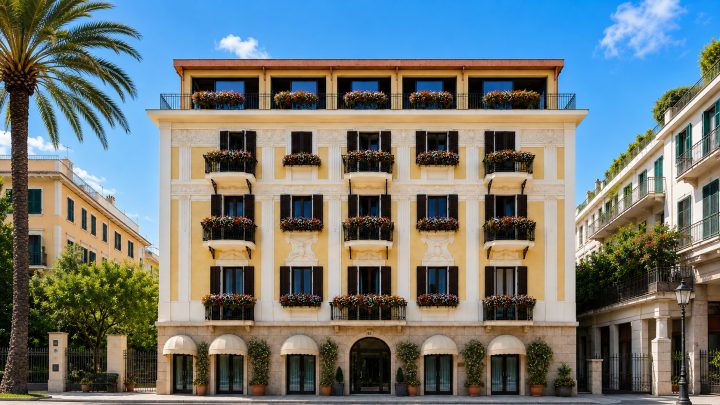
At the opposite extreme lies the Via Mozart area, one of Milan’s most elegant and discreet residential districts.
Here, the urban landscape changes completely. Stately buildings, carefully maintained façades, monumental entrances, courtyards and private gardens create a quiet and rarefied atmosphere, far removed from the commercial and social density of Via Padova.
The area’s appeal does not depend on the number of attractions, but on the quality of its architecture and urban space. It is a neighbourhood to be explored slowly, observing details, proportions and materials.
Via Mozart represents an aristocratic and international Milan, comparable in atmosphere to areas such as Mayfair in London or parts of the 7th arrondissement and Passy in Paris.
Placing Via Mozart alongside Via Padova helps reveal the depth of Milan’s differences. On one side is a popular, multicultural city undergoing transformation; on the other, a discreet residential city of exceptionally high standing.
They truly are two extremes, but both belong to the same Milan. It is precisely this contrast that makes them equally interesting.
Via Paolo Sarpi: Milan’s Chinese district between history and contemporary life
Via Paolo Sarpi is one of the most recognisable streets in multicultural Milan. Over time, the presence of the Chinese community has created a strong commercial and gastronomic identity that is now fully integrated into the life of the city.
The pedestrian street, shops, restaurants, workshops and long-established businesses make the area pleasant to explore at a relaxed pace. It is a lively neighbourhood, visited not only for food, but also for walking, shopping and observing a part of Milan that has developed a very distinctive urban language.
Its location is also strategic. Arco della Pace, Parco Sempione and the Corso Sempione area can be reached within a few minutes, making it easy to create an itinerary combining cultural identity, gastronomy and public spaces.
Via Paolo Sarpi demonstrates that Milan is not only an international city because of its economic vocation, but also because of the tangible presence of communities that have changed its landscape, habits and everyday life.
Which neighbourhood to choose according to your interests
Each area reveals a different Milan:
- Porta Romana for culture, theatre and dining;
- Città Studi for university life and an everyday atmosphere;
- Ortica for murals, urban memory and working-class identity;
- Porta Venezia for Art Nouveau architecture, museums and multiculturalism;
- Isola for urban transformation and the new skyline;
- NoLo for a young, complex and evolving Milan;
- Piazzale Loreto and Via Padova for multiculturalism, popular life and urban regeneration;
- Via Mozart for great residential elegance and architecture;
- Via Paolo Sarpi for gastronomy, cultural identity and neighbourhood life.
The best choice depends on the experience desired. Those who enjoy architecture may choose Porta Venezia and Via Mozart. Visitors seeking a more everyday Milan may prefer Città Studi, Ortica or Via Padova. Those interested in recent transformations will find two very different but equally significant examples in Isola and NoLo.
How to create an itinerary outside the centre
To understand Milan’s neighbourhoods properly, it is better not to include too many in the same day. One or two well-chosen areas reveal far more than a continuous race between underground stations.
Some combinations work particularly well:
- Porta Romana and Fondazione Prada;
- Città Studi and Ortica;
- Isola and Porta Nuova;
- Via Paolo Sarpi, Arco della Pace and Parco Sempione;
- Porta Venezia and Via Mozart;
- Piazzale Loreto, NoLo and part of Via Padova.
Via Padova and Via Mozart can also be observed as two extremes of the same city, even though they are not close to one another. Their geographical distance matters less than the contrast they reveal: density and silence, popular commerce and elite residential life, transformation and continuity.
The underground makes longer journeys straightforward, but it is still advisable to leave time for walking. Neighbourhoods are understood through their side streets, courtyards, cafés, shops and public spaces, not only through the points marked on maps.
A less tourist-oriented Milan does not mean a secret Milan
Many of the neighbourhoods described are not unknown. Porta Venezia, Isola and Via Paolo Sarpi are now familiar even beyond Milan. This does not make them any less authentic.
Authenticity does not depend on a place being hidden, but on the relationship it maintains with the people who live there. Markets, cafés, shops, schools, theatres and public spaces continue to express everyday life even in the best-known neighbourhoods.
For this reason, it is worth avoiding the rhetoric of the “hidden gem”. Milan does not need to be turned into a search for an undiscoverable place. It is often enough to move away from the most automatic routes and pay closer attention to what is happening nearby.
Where to stay when exploring Milan’s neighbourhoods
To visit different parts of the city, choosing a well-connected base can be more useful than necessarily staying in the historic centre.
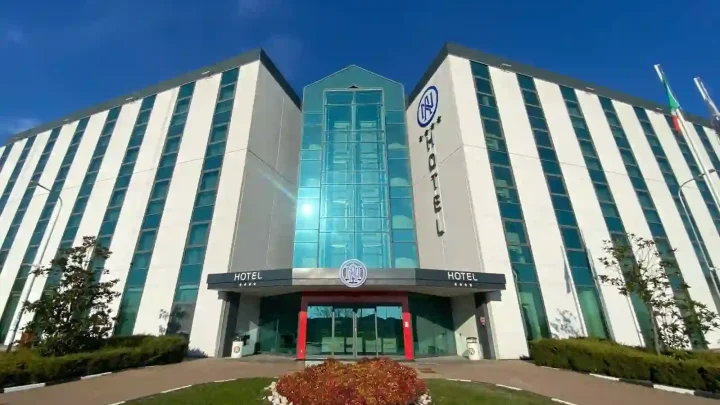
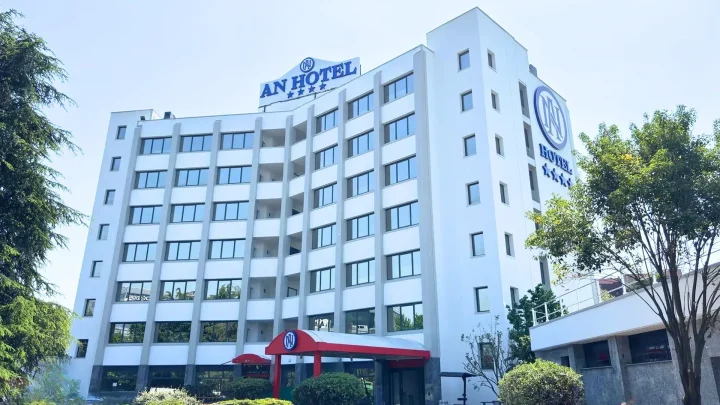
The three AN Hotels properties in the metropolitan area are:
- AN Hotel Milano San Donato ★★★★
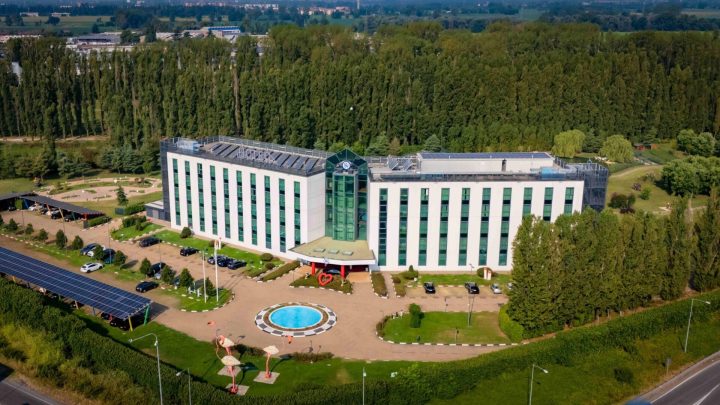
- AN Park Hotel Milano Settala ★★★★
- AN Hotel Milano Melegnano ★★★★
AN Hotel Milano San Donato is particularly convenient for reaching Porta Romana and the city centre via the M3 underground line, as well as for travelling towards south-eastern Milan.
AN Park Hotel Milano Settala provides a quiet base for exploring eastern Milan, Città Studi, Ortica and Lambrate, with the advantage of returning to green and relaxing surroundings.
AN Hotel Milano Melegnano is suitable for those travelling by car who wish to combine the city’s neighbourhoods with the territory south of Milan.
The three properties offer comfortable rooms, parking and four-star services, allowing guests to create different itineraries without staying in the most congested heart of the city.
Milan beyond the Duomo is a city to experience slowly
The centre remains an essential starting point, but the neighbourhoods reveal the most complex and interesting side of Milan.
Porta Romana, Città Studi, Ortica, Porta Venezia, Isola, NoLo, Via Padova, Via Mozart and Via Paolo Sarpi describe very different cities, often distant from one another in terms of history, public and urban landscape.
There is no need to visit them all during the same trip. The quality of the experience depends on the time devoted to each area and on the ability to observe what happens beyond the main attractions.
Milan is understood more clearly when its contradictory nature is accepted: elegant and popular, international and local, orderly and unresolved. It is precisely this plurality that makes it a city that continues to change without ever becoming only one thing.
Frequently asked questions about Milan neighbourhoods worth visiting
Which Milan neighbourhoods are worth visiting beyond the centre?
Porta Romana, Città Studi, Ortica, Porta Venezia, Isola, NoLo, Via Padova, Via Mozart and Via Paolo Sarpi offer very different experiences, from university life to elegant architecture, and from street art to multiculturalism.
Which is Milan’s most authentic neighbourhood?
There is no single answer. Città Studi and Ortica retain a strong everyday dimension, while Via Padova and NoLo reveal a popular, multicultural Milan that is still undergoing transformation.
Which neighbourhoods should you visit if you only have one day?
It is better to choose two nearby areas, such as Città Studi and Ortica, Isola and Porta Nuova, or Porta Venezia and Via Mozart.
Porta Romana, Via Paolo Sarpi, Ortica, Via Padova and Città Studi are excellent alternatives for discovering a Milan less connected with the most predictable tourist routes.
Where should you stay when visiting different Milan neighbourhoods?
The AN Hotels properties in San Donato, Settala and Melegnano provide useful bases for exploring different areas of the city, allowing guests to choose the hotel that best matches their itinerary.
👉 Check availability and book now with AN Hotels
AN Hotels venues: excellence in Italian hospitality
AN Hotels brings together three 4-star hotels in the eastern and southern metropolitan areas of Milan, designed for those travelling for major events, work or pleasure. Three different structures, one common thread: a warm welcome, precise organisation and services designed to make every guest feel special.


AN Hotel Milano San Donato **** is a 4-star hotel located close to the Santa Giulia area and the Unipol Dome-Arena. Quiet rooms, contemporary furnishings, fast Wi-Fi and a breakfast designed to satisfy even the most demanding palates. Its proximity to the main roads and underground connections allows you to get around quickly and easily. For a gourmet dinner, the Privé restaurant inside the hotel awaits you.


AN Park Hotel Milano Settala **** is the jewel in the crown of the collection. Set in a large park with a swimming pool, children’s area and mini golf course, it offers the perfect balance between high-end hospitality and authentic relaxation. The spacious meeting rooms and elegant event spaces make it perfect for business meetings, hospitality during the Olympics and private evenings. Here, the days end with aperitifs in the park and elegant dinners in the Privé gourmet restaurant.


AN Hotel Milano Melegnano **** is ideal for those who want to stay away from the hustle and bustle, without sacrificing proximity to Milan and the main roads. Easy access, convenient parking and functional rooms guarantee true rest after busy days.


Discover the world of AN Hotels and continue exploring the Magazine for insights, travel tips and venue guides. The staff is on hand to help you choose the hotel that best suits your style of stay.
What are you waiting for? Book your experience now! info@an-hotels.com – +39 02 97071337