Milan’s Monumental Cemetery: what to see and how to visit
Some places tell a city’s history through the façades of its buildings; at Milan’s Monumental Cemetery, that history is instead written in stone, in names and in sculpture. Not far from the liveliest districts of contemporary Milan, this extensive site preserves traces of artists, entrepreneurs, musicians, writers and less familiar people who helped shape the city’s life. It is not simply a burial ground: it is also an extraordinary journey through the architecture and art of the past 160 years.
Visiting the Monumentale means seeing how a city has chosen to remember its leading figures, but also how artistic expression and the ways in which memory is represented have changed over time. This guide introduces the works worth seeking out, a suggested itinerary to help you find your way and practical information for a respectful, thoughtful visit. The occasion is especially meaningful in autumn 2026: 2 November marks 160 years since the cemetery opened.
The history of the Monumental Cemetery: 160 years of Milanese memory
In nineteenth-century Milan, a city undergoing rapid transformation, there was a need for a large cemetery capable of serving its population and reflecting a new understanding of public space. In 1860, the city authorities launched a design competition, which resulted in the selection of architect Carlo Maciachini. His project received final approval in 1863, and the site opened for burials on 2 November 1866, while some of its architectural elements were still being built.
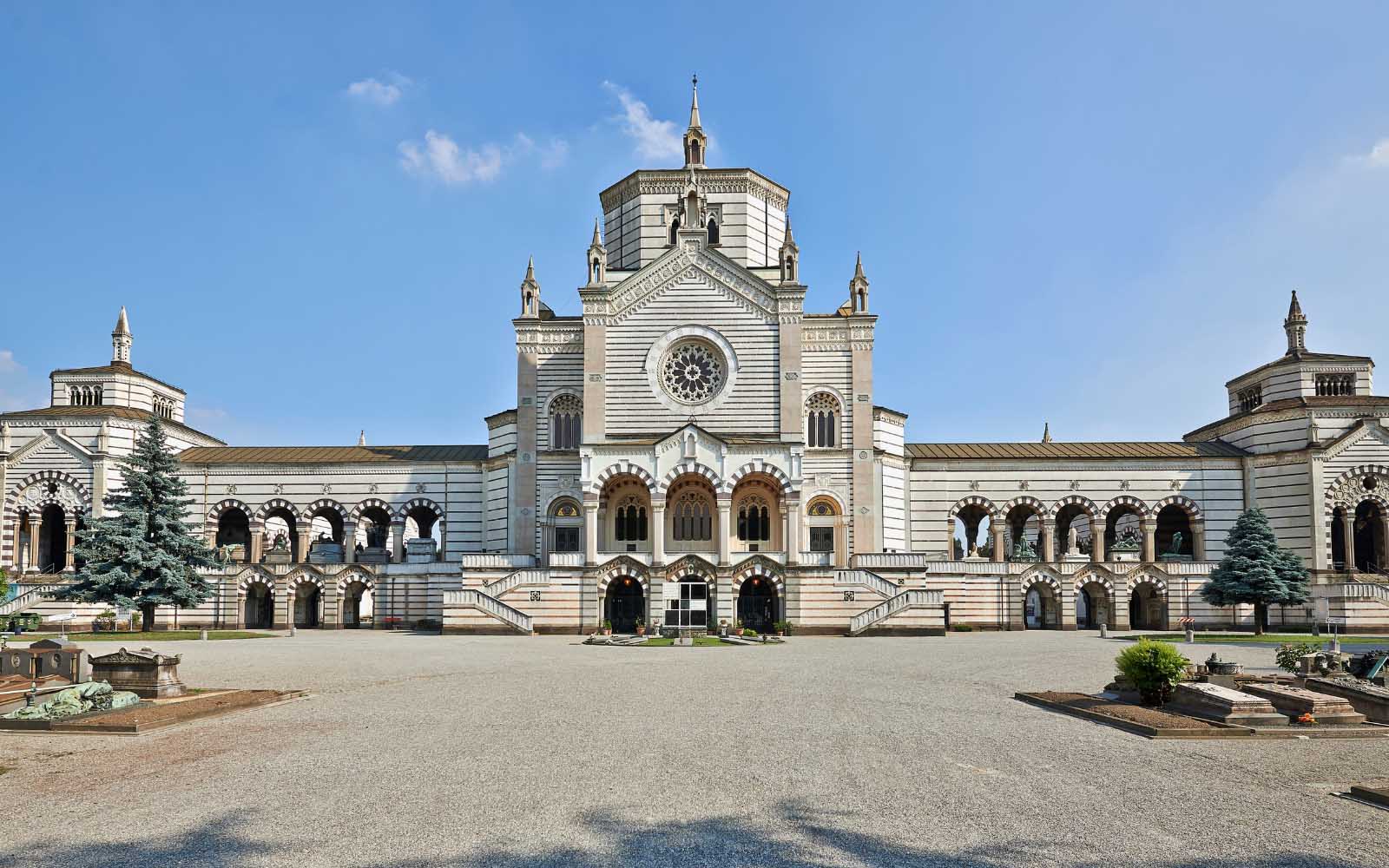
From the beginning, the Monumentale had a dual purpose. It was intended to receive the dead regardless of social standing, but also to become a place where the city’s civic history could be recognised. That ambition helps explain why its entrance resembles that of a grand public building and why works by leading architects and sculptors can be found along its avenues.
The complex developed over several decades. The perimeter wall was completed in 1870, the central ossuary in 1873 and the Famedio, which now dominates the main entrance, in 1887. Its evolution mirrors the growth of industrial Milan and, later, of the modern metropolis: from the great entrepreneurial families to figures from the arts and culture, and the painful memories of the twentieth century. The 2026 anniversary therefore marks not a static monument, but a place that continues to tell the story of the relationship between the city and those who have lived in it.
An open-air museum of architecture and sculpture
The first thing to observe is Maciachini’s architecture. The Monumentale brings together Gothic influences, Lombard and Pisan Romanesque forms, Byzantine touches and the monumental composition typical of the nineteenth century. Rather than reproducing a single historical style, it is an eclectic design in which different architectural languages lend solemnity to a shared public space.
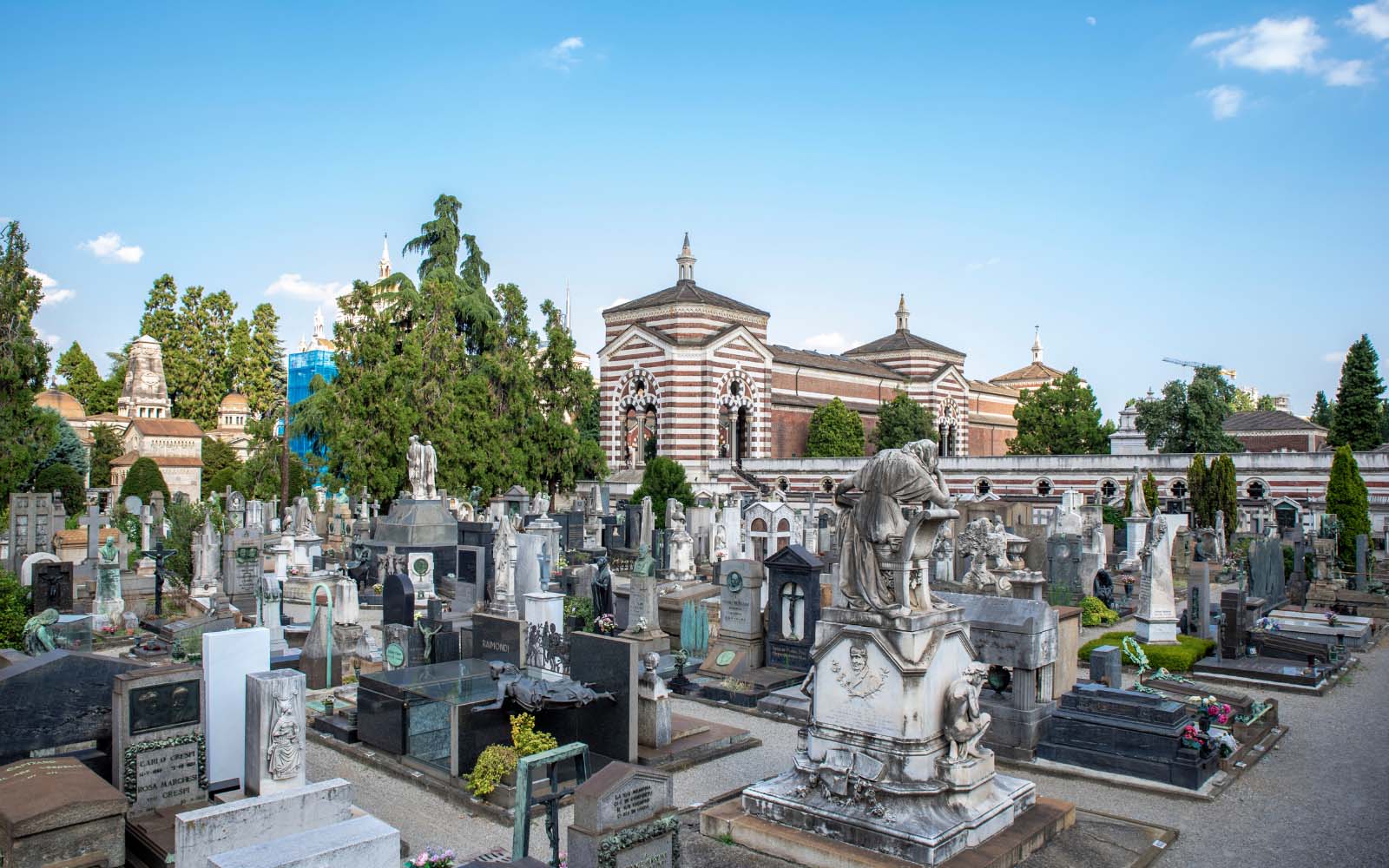
Beyond the entrance, the variety grows. Some tombs resemble small classical temples; others take the form of chapels, towers, gateways or sculptural groups. Funerary art becomes a way of tracing the succession of Realism, Symbolism, Art Nouveau and twentieth-century artistic languages. Even the materials reveal changing tastes: marble, stone, bronze, mosaics and iron create very different effects depending on the period and the artist.
The greenery is another important detail. Trees and avenues are not merely decorative surroundings: they were part of the original cemetery design and today make it possible to appreciate the works at a slower pace. The Monumentale also contains historically distinct sections, including those intended for Jewish and non-Catholic burials. This arrangement reminds us that Milanese memory belongs neither to a single tradition nor only to the most celebrated families.
To broaden your cultural itinerary beyond the Monumentale, the Magazine also offers a guide to Milan’s cultural landmarks. Here, however, slowing down is advisable: some works deserve several minutes of attention before you move on.
The Famedio and the people who shaped Milan’s history
The Famedio is the most natural starting point. Its name evokes a ‘temple of fame’, and its purpose is to preserve the memory of people who played a significant role in Milanese and Italian life. Completed in the 1880s, it contains decorations, inscriptions and portraits that transform the building into a kind of carved and painted civic archive.
Alessandro Manzoni rests at its centre; his remains were transferred here in 1883. Carlo Cattaneo and the architect Luca Beltrami are also buried in the main hall, alongside figures including Salvatore Quasimodo, Bruno Munari and Carla Fracci. The celebrated ballerina, laid to rest here in 2021, symbolically links the memory preserved in the Famedio to the more recent history of performance in Milan.
It is important to distinguish those buried here from those who are simply commemorated. The memorial plaques also honour people interred elsewhere, while the crypt of the Famedio contains the graves of Alda Merini, Giorgio Gaber, Enzo Jannacci, Dario Fo and Franca Rame, among others. Poets, musicians and artists thus share a space that makes the city’s many voices visible. The visit becomes more meaningful when each name ceases to be merely an entry on a plaque and instead calls to mind a work of art, a song, a book or an act of civic commitment.
Works of art and monuments not to miss
The richness of the Monumental Cemetery is especially apparent in its family funerary chapels, often commissioned by families associated with the city’s economic growth. It would be impossible to explore them all in a single visit. A few, however, offer a particularly clear insight into the relationship between art, patronage and remembrance.
The Bernocchi chapel: a spiral carved in stone
The Bernocchi chapel is one of the most recognisable monuments in the Necropolis. Designed by architect Alessandro Minali, with sculptures by Giannino Castiglioni, it was built between 1931 and 1936. The structure rises in a powerful spiral above a square base: its upward movement lends the building a remarkable visual energy, quite unlike the composure of a traditional chapel.
Its sculpted panels depict episodes from the Passion of Christ and work in dialogue with the mosaic decorations on the lower part. The monument commemorates Antonio Bernocchi and his wife Camilla Nava. Through the story of the textile industrialist and benefactor, visitors also glimpse a Milan that invested in manufacturing, education and cultural institutions.
The Campari chapel: Giannino Castiglioni’s Last Supper
The Campari chapel, created by Castiglioni in the 1930s, is striking for its bronze group depicting the Last Supper. The scene is not confined to a relief: the figures occupy the space around the table, inviting visitors to study gestures, distances and relationships. It is a composition with a powerful theatrical presence, inspired by a central subject in Christian art and inevitably associated, in Milan, with Leonardo.
The monument was commissioned by Davide Campari. The name recalls the history of a Milanese business, but standing before the work, it is above all the sculptural language that commands attention. The group can be viewed from several angles, revealing how bronze, movement and the arrangement of the figures construct the narrative.
Bocconi, Pirelli and Falck: stories of enterprise
The Bocconi, Pirelli and Falck family chapels belong to different periods and reflect different stylistic choices. Seeing them in relation to one another reveals a distinctive feature of the Monumentale: the private memory of families is intertwined with the public history of industry and work. A name inscribed in stone often tells more than an individual’s life; it also evokes factories, innovations, institutions and urban change.
You do not need to recognise every artist’s signature to appreciate this connection. Comparing the proportions, materials and subjects of the works is enough: some favour architectural grandeur, while others entrust remembrance to human figures or allegories. In this way, a visit becomes a history of Milan told through very different artistic commissions.
The memorial to those who died in Nazi extermination camps
Among the site’s most important civic works is the memorial designed by the BBPR architectural practice, formed by Banfi, Belgiojoso, Peressutti and Rogers. Its essential structure, created through the intersection of a cube and a Greek cross, introduces an architectural language radically different from that of the grand nineteenth-century family chapels. At its centre is an urn containing earth brought from the Mauthausen camp.
Here, the significance of the Monumentale goes beyond the commemoration of individuals. Remembering the victims of the extermination camps invites collective reflection and shows how twentieth-century architecture sought new, restrained and rigorous forms through which to represent a historical tragedy.
A suggested itinerary for your first visit
On a first exploration, it is worth choosing a limited number of stops and allowing time to look carefully. From the main entrance, you can begin with the Famedio, continue towards the memorial to those who died in Nazi extermination camps, then spend time in the areas containing the great families’ chapels and Castiglioni’s works. Your route might include the Bernocchi and Campari chapels and, if time allows, the Bocconi and Falck chapels.
This is not a sequence to follow mechanically: the Monumentale is extensive, and finding the works requires a map. The official Monumental Cemetery website provides themed itineraries and a general route, helping visitors select stops according to their interests. The information point, beneath the porticoes to the left of the entrance, offers guidance and printed material.
It is also worth observing the things that do not appear on lists of the most famous works: inscriptions, small portraits, recurring symbols and choices of materials. If a particular monument catches your attention, stopping to read it may be more rewarding than trying to fit in as many stops as possible. Architecture enthusiasts may prefer to concentrate on the chapels; those interested in Milan’s cultural history may wish to spend longer in the Famedio and by artists’ graves.
How to visit Milan’s Monumental Cemetery
The main entrance is in Piazzale Cimitero Monumentale. According to the cemetery’s official website, admission is free and normal opening hours are 8.00 am to 6.00 pm, Tuesday to Sunday; the cemetery is closed on non-public-holiday Mondays. Last admission is thirty minutes before closing. Reduced hours apply on certain public holidays, so it is sensible to check the latest notices before setting out, particularly around All Saints’ Day.
Milan’s monumental cemetery
The most direct public transport connection is Monumentale station on Metro line M5. Tram services are also available, while the Porta Garibaldi area is a useful reference point for travellers arriving via the railway network. Inside, you will walk along avenues and through substantial grounds: comfortable shoes and a shortlist of stops will help make the visit more enjoyable.
The city authorities state that wheelchairs are available at the main gate and Porta Acattolici. If you have specific accessibility requirements, it is best to check route conditions, equipment availability and any restrictions in advance. The Monumentale is, after all, a historic site with different surfaces and access points, not a purpose-built modern museum.
You can visit independently and, when scheduled, join guided tours or themed walks. At the time this guide was prepared, however, the official calendar indicated that organised visitor routes would be suspended throughout November 2026. This should not be confused with a general closure of the cemetery. Check the programme before planning a guided visit.
Above all, it is important to remember the nature of the place. Alongside its artistic heritage, ordinary cemetery activities continue, and visitors may encounter people remembering loved ones. Speaking quietly, keeping pathways clear and photographing discreetly are simple but essential courtesies.
All Saints’ Day, 2 November and the city’s memory
The approach of All Saints’ Day and All Souls’ Day makes autumn a particularly meaningful time to consider the Monumentale. In 2026, 2 November also marks 160 years since it opened for burials. Yet the reason to visit extends well beyond an anniversary: at any time of year, the cemetery offers insight into how Milan has constructed its public memory.
Its artistic and personal dimensions are not mutually exclusive. A work may be admired for the quality of its sculpture while also being recognised as an act of remembrance. It is precisely this dual reading that makes the Monumentale different from an art gallery or a monument park: here, beauty is always connected to a human story.
Those wishing to continue discovering a less predictable side of the city can also read the Magazine’s guide to Milan beyond the Duomo, designed to explore Milan through different neighbourhoods, places and identities. For a stay in the Milan area, AN Hotel Milano San Donato is one of the properties in the AN Hotels portfolio worth considering according to your travel plans and the journeys you intend to make.
AN Hotels venues: excellence in Italian hospitality
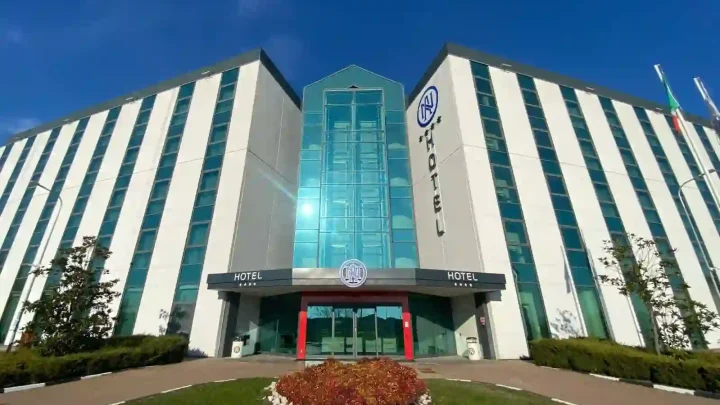
The Milan-area portfolio of AN Hotels brings together three four-star hotels to the east and south of metropolitan Milan, designed for visitors travelling for major events, work or leisure. Three different properties share a common thread: a warm welcome, careful organisation and services designed to make every guest feel valued.
AN Hotel Milano San Donato is the four-star property near the Santa Giulia area and the Unipol Dome Arena. Its rooms feature contemporary furnishings, Wi-Fi and a breakfast designed to suit a wide range of tastes, including the most discerning. Proximity to major roads and metropolitan transport connections makes getting around easier. The hotel has private, on-site parking, convenient for guests arriving by car. For a gourmet dinner, the hotel’s Ristorante Privé awaits.
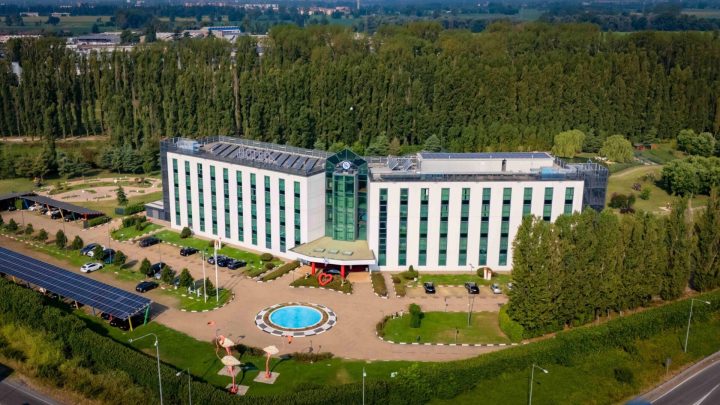
AN Park Hotel Milano Settala is the flagship of the collection. Set within a large park featuring an outdoor swimming pool, a children’s play area and a minigolf course, it balances high-quality hospitality with relaxation. Its spacious meeting rooms and elegant event spaces lend themselves to business meetings, hospitality during major events and private evening occasions. Private, on-site also with covered parking makes arriving by car more convenient. Here, days draw to a close with aperitifs in the park and elegant dinners at Ristorante Privé.
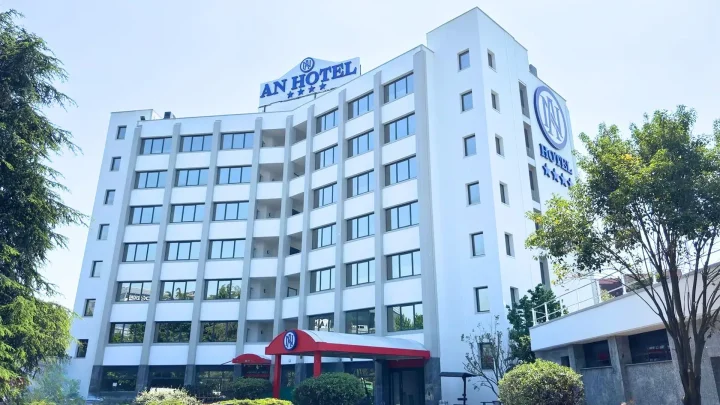
AN Hotel Milano Melegnano is ideal for guests who wish to stay away from the bustle without giving up convenient access to Milan and major roads. Easy access, private, on-site parking, and functional rooms help guests rest after busy days.
Discover the world of AN Hotels and continue exploring the Magazine for insights, travel advice and guides to our venues. The team is available to help you choose the hotel best suited to the way you like to travel.
What are you waiting for? Book your experience now: info@an-hotels.com – +39 02 97071337
👉 Check availability and book now with AN Hotels
AN Hotels venues: excellence in Italian hospitality
AN Hotels brings together three 4-star hotels in the eastern and southern metropolitan areas of Milan, designed for those travelling for major events, work or pleasure. Three different structures, one common thread: a warm welcome, precise organisation and services designed to make every guest feel special.


AN Hotel Milano San Donato **** is a 4-star hotel located close to the Santa Giulia area and the Unipol Dome-Arena. Quiet rooms, contemporary furnishings, fast Wi-Fi and a breakfast designed to satisfy even the most demanding palates. Its proximity to the main roads and underground connections allows you to get around quickly and easily. The hotel has private, on-site parking, convenient for those arriving by car. For a gourmet dinner, the Privé restaurant inside the hotel awaits you.


AN Park Hotel Milano Settala **** is the jewel in the crown of the collection. Set in a large park with an outdoor swimming pool, children’s area and mini golf course, it offers the perfect balance between high-end hospitality and authentic relaxation. The park also features a fitness trail for outdoor exercise. The spacious meeting rooms and elegant event spaces make it perfect for business meetings, hospitality during major events and private evenings. Private, on-site also with covered parking makes arriving by car more convenient. Here, the days end with aperitifs in the park and elegant dinners in the Privé gourmet restaurant. The hotel has an in-house gym for its guests.


AN Hotel Milano Melegnano **** is ideal for those who want to stay away from the hustle and bustle, without sacrificing proximity to Milan and the main roads. Easy access, private, on-site parking and functional rooms guarantee true rest after busy days.


Discover the world of AN Hotels and continue exploring the Magazine for insights, travel tips and venue guides. The staff is on hand to help you choose the hotel that best suits your style of stay.
What are you waiting for? Book your experience now! info@an-hotels.com – +39 02 97071337